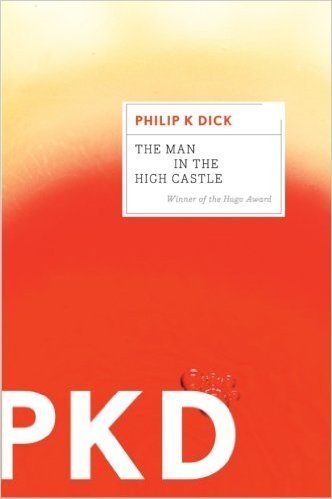
Interesting read. Have always enjoyed Philip K Dicks novels… sadly not surprised he struggled with mental and substance abuse. His books read in a way that often feature a character somewhat removed from reality or in some form of psychosis. The idea of what is real or not real is explored over and over again. I cannot help but think he was writing from his own soul or at least his own experience. He was always the looker peering into the another world that he just didn’t quite fit into. It makes me feel sad like he was often likely very lonely despite his genius and fame :/.
His psychosis allowed him to see reality as being extremely flexible and influenced by often malignant forces. That applies to modern society as more of our "reality" depends on things such as social media and that's clearly able to be influenced by bad actors. It's only going to get worse as we can't believe that a picture or video of someone isn't faked and so all we can do is try to figure out our own narrative.
His work also features lots of surveillance themes (again, likely due to the nature of his psychosis) and I can't think of anything more relevant to modern society. We've now reached the stage of technology where it's feasible for us all to be living in a panopticon.
Another major theme in PKD's work is "what makes us human" and we're getting close to producing LLMs that seem to behave as though they are human. If we give an AI a sense of personal identity with some fake memories, then would we be able to tell that they weren't human and what would they "think" about it?
Highly intelligent people often suffer from these crises because they see more than most people, and have an unfortunate knack for predicting it right.
While feasible, you can't really call living in a panopticon actually living. You have no control over the inputs as indoctrination primes you to behave, believe, and act a certain way, and any divergence would be destroyed as a threat to the system.
People in those systems are often no better than cattle and threats to the system are secondarily correlated with intelligence. Through selective breeding (multiple steps removed) that too can be removed as a threat.
> sadly not surprised he struggled with mental and substance abuse. His books read in a way that often feature a character somewhat removed from reality or in some form of psychosis. The idea of what is real or not real is explored over and over again
Don't take that is an indicator, Haruki Murakami often reads similarly and he seems to be a well adjusted person.
This comment is probably unnecessary but I've been reading tons of Murakami lately so here's a take:
Murakami's main schtick, I realized, is to write in the style of a hard-boiled detective novel, like Raymond Chandler (who he has often cited as an influence / obsession)... except that instead of the protagonist being a literal private investigator who wanders the city and meets people to solve the mystery of a murder, it's a disconnected man who wanders the city solving a mystery that's like, how to connect with people or how to get over a sense of loss or something. The world is mysterious, like how in a detective novel with corruption and intrigue and stuff, but it feels like it's that way because of how mysterious human connection is to his protagonists.
Philip K Dick, on the other hand, writes a mysterious world that makes some paranoid idea he had actually real. They're superficially similar but, I think, not really actually coming from the same place at all.
What about it not being a binary indicator invalidates the analysis?
Dick's writing was obviously a byproduct of his mental state. That's where writing comes from. Just because someone else made similar works in a different mental state doesn't invalidate that.
Philip K Dick's A Scanner Darkly contains an Author's Note at the end of the book on this topic. This is the note from the copy I have:
"AUTHOR'S NOTE:
This has been a novel about some people who were punished entirely too much for what they did. They wanted to have a good time, but they were like children playing in the street; they could see one after another of them being killed--run over, maimed, destroyed--but they continued to play anyhow. We really all were very happy for a while, sitting around not toiling but just bullshitting and playing, but it was for such a terrible brief time, and then the punishment was beyond belief: even when we could see it, we could not believe it. For example, while I was writing this I learned that the person on whom the character Jerry Fabin is based killed himself. My friend on whom I based the character Ernie Luckman died before I began the novel. For a while I myself was one of these children playing in the street; I was, like the rest of them, trying to play instead of being grown up, and I was punished. I am on the list below, which is a list of those to whom this novel is dedicated, and what became of each.
Drug misuse is not a disease, it is a decision, like the decision to step out in front of a moving car. You would call that not a disease but an error in judgment. When a bunch of people begin to do it, it is a social error, a life-style. In this particular life-style the motto is "Be happy now because tomorrow you are dying," but the dying begins almost at once, and the happiness is a memory. It is, then, only a speeding up, an intensifying, of the ordinary human existence. It is not different from your life-style, it is only faster. It all takes place in days or weeks or months instead of years. "Take the cash and let the credit go," as Villon said in 1460. But that is a mistake if the cash is a penny and the credit a whole lifetime.
There is no moral in this novel; it is not bourgeois; it does not say they were wrong to play when they should have toiled; it just tells what the consequences were. In Greek drama they were beginning, as a society, to discover science, which means causal law. Here in this novel there is Nemesis: not fate, because any one of us could have chosen to stop playing in the street, but, as I narrate from the deepest part of my life and heart, a dreadful Nemesis for those who kept on playing. I myself, I am not a character in this novel; I am the novel. So, though, was our entire nation at this time. This novel is about more people than I knew personally. Some we all read about in the newspapers. It was, this sitting around with our buddies and bullshitting while making tape recordings, the bad decision of the decade, the sixties, both in and out of the establishment. And nature cracked down on us. We were forced to stop by things dreadful.
If there was any "sin," it was that these people wanted to keep on having a good time forever, and were punished for that, but, as I say, I feel that, if so, the punishment was far too great, and I prefer to think of it only in a Greek or morally neutral way, as mere science, as deterministic impartial cause-and-effect. I loved them all. Here is the list, to whom I dedicate my love:
To Gaylene deceased
To Ray deceased
To Francy permanent psychosis
To Kathy permanent brain damage
To Jim deceased
To Val massive permanent brain damage
To Nancy permanent psychosis
To Joanne permanent brain damage
To Maren deceased
To Nick deceased
To Terry deceased
To Dennis deceased
To Phil permanent pancreatic damage
To Sue permanent vascular damage
To Jerri permanent psychosis and vascular damage
. . . and so forth.
In Memoriam. These were comrades whom I had; there are no better. They remain in my mind, and the enemy will never be forgiven. The "enemy" was their mistake in playing. Let them all play again, in some other way, and let them be happy."
I was talking to a guy who was into drug counselling. He laid out some pretty shocking facts, like children as young as 12 take drugs. This made me absolutely convinced that we should not legalise drugs, except in the case where there legitimate medical uses.
He also said that he got annoyed when the police announced that there was a particularly potent batch of drugs on the streets at the time. His reasoning is that it only encourages drug users.
Also, experience of using drugs is no guarantee of safe drugs practise. If anything, it's the contrary. People become complacent in what they think they can handle, which spells trouble.
Also, drug purity can vary by region. You won't know about it in advance, but if
you take drugs from a less tainted batch then you usually do, then you could well be taking a much higher dosage of the drug than your body is used to. Not good.
And finally, the most chilling part of all. He said that if you were to put some heroin on a table and say that this is the purest heroin on the market. You can take it, but knowing you will die. Many would still take it.
> He also said that he got annoyed when the police announced that there was a particularly potent batch of drugs on the streets at the time. ... Also, drug purity can vary by region. You won't know about it in advance, but if you take drugs from a less tainted batch then you usually do, then you could well be taking a much higher dosage of the drug than your body is used to. Not good.
This would all be improved by legalization and regulation. Nobody dies because a Bud Light is suddenly a lot stronger in one region than another.
> Nobody dies because a Bud Light is suddenly a lot stronger in one region than another.
I'm sure a lot would die if one beer unexpectedly has the potency of 3. A lot of people already drink and drive and they'd be more impaired than usual.
Legalizing drugs can actually reduce number of kids taking drugs. Because you can require shops to ask for ID. Back street dealers won't.
I think people often imagine legalizing drugs means there will be heroin ads in TV. But you can legalize them and still regulate them heavily (no ads, only sell to adults, require warnings on the packaging, finance anti-drug campaigns from the sales taxes, etc.).
Portugal legalized drugs long ago and their drug problems seemed to get a lot better since.
Those all seem like arguments to legalise and regulate drugs. Alcohol is similarly deadly, and we have age related controls to prevent youngsters being able to buy it. There's also regulations to ensure that there's a consistent alcohol percentage (printed on the side) and that the drinks don't contain poisons other than ethanol.
Sadly, alcoholics continue to consume alcohol when they've been told multiple times that it will lead to their death and even sometimes after receiving a liver transplant.
Alcohol and drugs should be treated as a public health issue and not a nonsensical war.
Society is not better off with thousands of Al Capones and moonshine but less drinking over all. It is such a stupid argument. It is just unbelievable in the US that with having so few borders and neighboring countries to worry about that we don't care that Al Capone has taken over one of them. Exactly the result of how much we like to drink and how much we will pay for drinks.
Just the standard bullshit "What about the children" arguments.
Not to mention in 2023 that you have to add in a huge amount of straight up poison moonshine or people think they are drinking moonshine but instead are drinking gasoline.
> He laid out some pretty shocking facts, like children as young as 12 take drugs. This made me absolutely convinced that we should not legalise drugs, except in the case where there legitimate medical uses.
I don't understand the logic that because children as young as 12 are able to obtain and take drugs, we should keep the drug policies under which that occurs in place.
As far as I'm aware, nobody serious is suggesting that 12 year olds should be allowed to buy or use drugs if they're legalized. Given that, the legalization question that matters is how we can do the best job of limiting the damage they do to 12 year olds through a combination of preventing them from acquiring drugs and regulating the drugs themselves, so that if they do get some drugs, those drugs don't contain a bunch of fentanyl.
I'm not going to say that legalizing drugs will certainly result in less harm, but I'm not writing it off as impossible, either. But to cite the fact that a bad thing is happening under your current harm mitigation strategy as a reason that we should absolutely keep that harm mitigation strategy seems like fundamentally flawed logic to me.
12? I believe it. In some cultures (like mine), it's almost a rite of passage if you have older siblings or friends, sadly.
Also, it's hard to say how much is self-medicating from poor living conditions, health problems, heritable diseases, etc. though. There are some areas of the country where there are many deeply poor people.
Superficial and entirely missing the mark. PKD spent years doing research trying to understand his most important mystical experience, and his extensive notes and documentation ended up in the book "exegesis" (also greatly influencing the philosophy underlying works such as Valis). None of that is of course mentioned in the article.
What we get is a random psychiatrist performing armchair psychoanalysis on someone he knows very little about.
If you want to get a handle on PKD and his problems, it's so much better to read his work and get his own perspective. Radio Free Albemuth is interesting as a kind of precursor to Valis, but I must admit to not wanting to read Exegesis as it looks too in depth.
I like just flipping through the Exegesis and reading random entries. It's always a fascinating trip. I would never be able to read it end to end (and it certainly was never intended to be).
It really is amazing to read after you've gone through VALIS.
Here's a few random passages I've highlighted on my Kindle. It's completely full of stuff like this, that you can just find by flipping somewhere random. It skirts the line between genius and insanity (which describes the man himself, I think). Sometimes I read one of the passages and I'm like "this man had totally lost all semblance of sanity" and sometimes I'm like "he was one of the smartest men to ever live". I think both are true. (And you've got to love how PKD himself explores the "wow, I really must be insane" avenue when he talks about The Exegesis in VALIS.)
> The brain is one multiperson ajna chakra, which one day as a unitary totality will open, discerning and annihilating (the 3rd eye of Shiva). (Herdsman of the souls.) All who participate in it will then see as I saw; they will be inside the eye; everything outside will be blasted, “burned like chaff,” i.e., cease to exist. At that point the brain will generate its own world out of itself. It, collectively, will totally control its world—the PTG.
> Ah! In Ubik locating the Ubik messages in cheap commercials was absolutely right on. I couldn’t have “guessed” more accurately. It’s obvious that the real author of Ubik was Ubik. It is a self proving novel; i.e., it couldn’t have come into existence unless it were true.
> This is a sinister life form indeed. First it takes power over us, reducing us to slaves, and then it causes us to forget our former state, and to be unable to see or to think straight, and not to know we can’t see or think straight, and finally it becomes invisible to us by reason of what it has done to us. We cannot even monitor our own deformity, our own impairment.
> Axiomatically, if you derange the brain in precise ways, not only will it be deranged, but if you have affected precisely the correct circuits it will be unaware that it is impaired and so not seek to rectify the damage.
> It’s like deciding something is real by comparing it with itself. So it’s a fool-proof simulation,
> No, damn it, it is like Ubik! The outside macrobrain is signaling us to wake up, we are like the characters in Eye, asleep—not on the floor of the bevatron—but while watching for Christ to return. We were made toxic—i.e., put into “half life”—as if killed. Fuck! I know it; Ubik is the paradigm! The half-life, the messages, Ubik itself, Runciter—we are in a sort of bubble of irreality: spurious world generated by—the plenary powers, astral determinism, whatever the fuck that is.
Whats so fascinating to me about PKD is that he taps into this rich, long, history of esoteric philosphy and practices and connects dots between ideas from disperate traditions. Not in the same way theosophy does- he seems to be more lucid and consistant.
This idea he has of wickedness being some kind of abscess in an otherwise perfect hermetically sealed bubble, and that the second coming of christ would be an event in which the evil is removed from the pure buble---- it explains concepts in christianity with concepts from other world religions and does so in an exceptionally vivid fashion.
Quite terrifying.
Good point. On his passing away right before Blade Runner was release, not even a mention that reportedly Ridley Scott screened parts of the movie, and he evidently was lost for words, saying “I’m in awe that you were able to reproduce what was in my mind”.
Most people know nothing about what they have never experienced, naturally. Yet that doesn't stop them from taking any opportunity to share their cultured opinions on what others report.
There's a large literature 'out there' about extraordinary, inner, life-changing experiences that people have have reported and recorded throughout history. Plenty of their neglected works were re-printed in the middle of the last century - for a reason. They're easy to discover once you are motivated to look. Until then, it's easy to assume that it's they who are imbalanced.
You'd think after reading so many of his books and stories you would know a person, this work from Crumb really shows how fiction writers often express themselves in unique ways that manage to keep themselves still private, somehow.
If anyone would really like to delve into PKD's life, I'd recommend the biography Divine Invasions (not to be confused with PKD's books "The Divine Invasion"). He was such a deeply fascinating person, and I feel like most articles you read about him manage to only touch on the obvious or superficial.
There's a passage in Martian Timeslip[1] where protagonist Jack Bohlen is brought in to repair an artificial teacher called "Kindly Dad":
> "Hi, Kindly Dad," he said without enthusiasm. Setting down his tool case he began unscrewing the back plate of the Teacher.
> Kindly Dad said in a warm, sympathetic voice, "What's your name, young fellow?"
> "My name," Jack said, as he unfastened the plate and laid it down beside him, "is Jack Bohlen, and I'm a kindly dad, too, just like you, Kindly Dad. My boy is ten years old, Kindly Dad. So don't call me young fellow, O.K.?" Again he was trembling hard, and sweating.
> "Ohh," Kindly Dad said. "I see!"
> "What do you see?" Jack said, and discovered that he was almost shouting. "Look," he said. "Go through your goddamn cycle, O.K.? If it makes it easier for you, go ahead and pretend I'm a little boy." I just want to get this done and get out of here, he said to himself, with as little trouble as possible. He could feel the swelling, complicated emotions inside him. Three hours! he thought dismally.
> Kindly Dad said, "Little Jackie, it seems to me you've got a mighty heavy weight on your chest today. Am I right?"
> "Today and every day." Jack clicked on his trouble-light and shone it up into the works of the Teacher. The mechanism seemed to be moving along its cycle properly so far.
Conceiving this as an LLM with a "kindly dad" prompt doesn't seem too far a stretch. PKD nicely catches the interpersonal "uncanny valley" into which his protagonist has wandered.
I have seen that LLMs (specifically character.ai) are not great for people in psychosis. I’m not sure that it’s actually worse than a psychosis without an LLM to talk to, but it has been painful to watch a loved one drawn in by it.
The highly LLM-like artificial teachers in Martian Timeslip (see my other comment here) contribute to the protagonist's psychotic episode in that book, iirc.
Having never read any of PKD's works before, I'd be interested in starting with his short stories (especially those that haven't yet been made into a movie, since I'd likely have seen it).
Looks like PKD wrote (at least) 87 short stories [1]- any recommendations or under-appreciated favorites from HN folks?
EDIT:
A few that have been recommended on Reddit [2] that look interesting include "The Exit Door Leads In", "The Golden Man", and "Autofac".
Philip K Dick is to amphetamine psychosis what Charles Bukowski is to alcoholism. Both are good writers, but living in their worlds would be something of a nightmare for the vast majority of people.
"18. Real time ceased in 70 C.E. with the fall of the temple at Jerusalem. It began again in 1974 C.E. The intervening period was a perfect spurious interpolation aping the creation of the Mind. 'The Empire never ended,' but in 1974 a cypher was sent out as a signal that the Age of Iron was over; the cypher consisted of two words: KING FELIX, which refers to the "
This is a decent article but the author unfortunately has no understanding of what is known as a "spiritual emergence", which PKD very clearly went through and is critical to understanding his life and legacy. One of the first phases of this process is "anamnesis", in which you recall information from what is thought to be past lives. Laugh all you want, until this has happened to you, you can't even imagine what it is like, but PKDs entire experience with the fish symbol was a clear example of this. There are many other signs, his precognition, the "AI voice", etc., all of which are common.
These events can mimic psychosis and other mental illnesses, but they are anything but. They signal the start of an inner metamorphosis, likely biochemically driven, though we don't yet know the biomarkers. It's like a second puberty, you have all these weird urges to meditate and whatnot, and if you do it right you grow and come out the other side a different person with a different experience of the world than the pre-pubescent .
Because of the general cultural lack of understanding and guidance, PKD, while brilliant, could only guess as to what was happening to him and had no idea what to do about it. In other times and other cultures, perhaps he could have been guided through the process, just as parents guide their children through puberty. It can take years to unfold and can easily go off the rails, see: Gopi Krishna, Living With Kundalini.
Unfortunately substances are one of the things that can make it go off the rails, and his propensity for them may have contributed to his untimely death instead of the preferred outcome of an "enlightened" individual. Again laugh all you want, until we figure out consciousness we have no basis to assume the non-existence of higher consciousness. But granted this whole space is polluted with new age crap, so unless you've had this happen to you it's understandable to paint it all with the same brush.
His Exegesis is a wonderful work, one of his best. Highly recommend reading.
Thank you for comment. Knew little about the man himself.
"I experienced an invasion of my mind by a transcendentally rational mind, as if I had been insane all my life and suddenly I had become sane."
This has to be experienced. (It's like Jimmy Hendrix says.) I'm not sure I would compare it to puberty, or an invasion. Definitely a visitation, however. It seems the historical successful travellers on the path were in the main fortunate to be born into families of adepts. In many cases it was the father who initiated the son. For others, the cultural milieu typically seeded the necessary symbolic guide posts.
> Reality is that which, even when you downvote it, doesn't go away. ;)
You have perhaps forgotten your own initial encounters with such topics. It is a healthy response of the unprepared psyche to recoil from such content to protect itself; it can be dangerous, as you must know. The third rail is very much alive.
>If I'm abusing substances it's not like I'm just having a puff now and then do I?
we can agree on that, but the phrase has been bandied around in the legal/law-enforcement community enough that it's clear that the definition is generally : if it's illegal, it's always abuse. If it's legal it's only abuse if Uncle Bob is nodding off at x-mas dinner and stumbling into the tree.
There seems to be a strong inclination to 'help' the people that are generally a nuisance to other people -- which is to say that the 'help' provided is a way to keep the social status quo for others, not to provide the 'substance abuse victim' with support.
Sure. My point is that this is not what an euphemisms is.
An euphemism is a mild word substituted for what you'd consider a harsh word.
What you're describing is the use of a harsh word to reference a specific thing that is frowned upon by sole group and they don't want to use a too loaded word to protect themselves from being labeled bigots or whatnot.
Consider this:
A blind person can be called visually impaired. That's an euphemism. There do exist visually impaired people who are not blind. Technically a blind person is also visually impaired. Calling a blind person visually impaired is a way to soften the language.
On the other hand, if every time you say "visually impaired" you only mean "blind" and all the non-blind people that are nevertheless visually impaired you no longer call them visually impaired, then that's no longer an euphemism, but the word just changed the meaning (as words do, often through the mechanism of euphemisms).
For examples "odour" is not an euphemism nowadays, although when the word got borrowed from french it was
I suppose you could argue "substance" includes raw plants/mushrooms that are not technically drugs, still "substance abuse" is an attempt not to mention drugs.
Haha wow judging by the downvotes I guess people disagree! I meant that "substance" is a euphemism for psychoactive drugs. I guess the whole term is jargony as well. It's fine, shrug.
It's bizarre that the article has a WARNING at the top which is a spoiler warning for a movie from the 1990s, but not a sensitive-content warning re: suicide.
Off topic, but it bothers me when people decry spoilers for an older movie. As if everybody is supposed to have watched every major film in the history of Hollywood up to the last N years.
"Spoiler alert for anybody who hasn't seen this movie from 1980: the dog did it!"
> they were just as immersed even though they knew the outcome. In follow-up questionnaires, they also reported the same levels of engagement and enjoyment as those who didn’t know the ending.
I'll spoil the links: 28 male college students aged 18-24 who were paid to do a job while watching a 30 minute episode didn't report enjoying it less if they were told the ending.
Somehow I feel their conclusions might be a bit overly broad.
Surely, as this is a purely subjective experience, what matters is not if spoilers don't affect enjoyment in general, but whether they affect enjoyment for me?
One of my favourite films, Stalker as a scene referred to as "the meat grinder". I knew how it went before I first watched it, and have always wished that I didn't. In general, I find it much more enjoyable to go into a film with as little foreknowledge as possible.
Haven't seen the movie but assuming it's like the roadside picnic book that scene is what made the story worth it for me besides the concept.
Nevermind I took a quick look at the plot and although the concept is close it seems different enough, at least at the ending.
I guess I should watch it already after postponing it for years.
This study makes the assumption that inmersion equals enjoyment.
The questionnaires were only used with the study that tested intact, scrambled story and non-monetary incentive. They were not used for the study that tested spoilers (at least I can't find it). Instead they assumed that inmersion equals enjoyment because of the results of an earlier study by them.
All studies were performed using a highly suspenseful short film with a high capacity to engage and a simple spoiler: Telling them if the characters were or not hurt in the movie.
This could well be one of the genres more prone to engage you even if you know the outcome. Even more so with a non specific spoiler like that.
I can't find individual data of the study to search for outliers. In my experience some people don't care or even seek spoilers while others avoid them like the plague.
It is not a random acronymization. Philip K Dick has long been referred to as PKD. There are printings of his novels with the recognizable initials PKD being printed larger than his name written out, like so:
when I read "do androids dream of electric sheep" that was my first and last reading of PKD-- I instantly realized it was a mediocre work by a mentally ill person. Vitae brevis. And I went back to my Samuel Richardson's and the like.