When it starts to get really burdensome to keep your promises, the idea of breaking them gets really attractive. But that doesn't come for free. It costs credibility.
The cost of central banks breaking their inflation-control commitment when inflation starts running hot, is that the market starts pricing in their unwillingness to raise interest rates. This fuels a whole bunch of other inflation feedback loops, and then before you know it, the central bank wants to get inflation back under control again. But now nobody believes that they'll do what they say they're going to do, so they end up having to work twice as hard.
If your goal is stability, it's better to just keep your promises to begin with.
Yup. The kernel of truth behind Austrian theories of macroeconomics/the business cycle is that interest-rate based policy setting is inherently an unstable system. If the central bank makes policy errors that fail to stabilize the underlying target (whether inflation, nominal income, exchange rates, whatever) the whole system starts spiraling away from that unstable equilibrium point, and the subsequently needed correction grows even larger. It's important that errors be promptly corrected, and expectations about future policy remain properly "anchored" to the right target.
Austrian theories appeal to me/seem correct beyond just a kernel, but I’d consider myself an amateur/haven’t read enough to be confident about my opinion.
Specifically, the emphasis on relative value seems correct, the emphasis on the importance of keeping pricing signals pure/unaffected by artificial monetary supply changes to effectively allocate resources seems correct, the argument that market incentives exist for keeping interest levels reasonable without centralization seem correct, and the argument that central banks are incentivized to mismanage monetary policy over time for political reasons seems correct.
The counter arguments against Austrian ideas that seem most compelling to me are that having non centralized currencies leads to financial inefficiencies that outweigh any benefits of having market determined interest rates because of exchange friction, and that a lack of planned inflation and adoption of more hard currency would mean the velocity of money would be low and cause the economy to lock up.
I’d be very interested in a book advocating the more traditional view in favor of central banking aimed specifically at Austrians and people like myself who find the Austrian arguments compelling.
If anyone here has more economic knowledge and thinks I mischaracterized the arguments I found compelling, garbled them, or misattributed them, please correct me.
Austrian economics is all anti-empirical say-so internally-consistent models that aren't tested against reality. Traditional economics is stuff that claims to be more empirical but fails to do so and focuses almost entirely on official stats and on its own versions of models that aren't tested against reality.
The whole field of economics is overall messed up. It's insular, arrogant, and extremely resistant to outside criticism. And it's dangerous as economics claims are used to justify so much.
Random amazing example:
In https://www.npr.org/transcripts/980841456 and from "My question is, what is the M1 money supply, and the M2 money supply, for that matter?" last third of it, insanely clear and amazing. In short:
Q: more money! does that mean inflation? check with this econ textbook author
Author: oh, that's embarrassing, that chapter shouldn't be there
Q: so what causes inflation?
Author: people buying stuff more, demand going up (unless it's insane money supply like Venezuela or Zimbabwe level insane)
Q: so why is the chapter in your textbook?
Author: um, publisher said that if we don't say that more money means inflation then econ professors won't use our textbook. They learned that idea in their original studies, so they will only use a textbook that lets them teach it. But it's wrong, and we shouldn't have put it in the book.
I know Austrians make a lot of noise about “not being empirical” (to their detriment), but I think that’s a bit misinterpreted, and I get where they’re coming from. I get not wanting to try to parse out a theory from a stream of data complex enough to justify nearly any initial hypothesis. You can still test whether core ideas on the Austrian side fit the facts via historical analysis and looking at how things respond to fed decisions/do at least a rough qualitative empirical analysis. I think the business cycle is an Austrian idea that has empirical evidence behind it at this point, for example.
My gut impression of economics from the outside is similar to yours, though, even though I think Austrians seem to have mostly the right core theory.
Are there any economic schools you or anyone else know of or forums where people discuss these types of things from a less ideological lens? I ran across this video a while ago by Scott Kominers, was very inspired by the example given and the lucidity of the explanation of what was going on/what helped improve things. https://youtu.be/JCKwkuzROzs .
Do you think economics is just too broad a field to avoid ideological schools that generalize/applied economics is better? Part of why I haven’t dug into theory more complicated than basic Austrian ideas is it feels kind of self referential and a waste of time. Applied economics seems like it might be different/an area where good rules and bad rules become evident, but idk.
Even if macro economics is ideological and arrogant and hand wavy, still curious about different arguments and counter arguments between schools
I'm no expert, I just have the impression that the field of economics professionally is basically a lost cause, at least until generational turn-over if even that.
Anything interesting has to engage with real facts like energy consumption, pollution, harvesting of raw materials, and somehow acknowledge the huge portion of human activities that are not measured in money. I don't know of anyone within economics who really does this, but if they exist, I am certain they are a pariah in the field, treated with contempt if even acknowledged by the rest of the folks.
I think there's something like "environmental economics" but I'm not sure the quality of it. I haven't looked in depth, but https://doughnuteconomics.org seems good, I just have the impression that it's enough work to just get people to even accept the basic premise, so there's not yet the depth of study that would get into the deep complexities, though I see no reason it couldn't get there.
On studying real humans as economic actors (rather than homo economicus), the best might be "behavioral economics" which is psychology, empirical, interested in real science (but arguably too behaviorist and not cognitive enough). I think they mostly only grapple with microeconomics and not macro. (I have the impression that the field of economics today, Austrians included, just have this say-so assertion that there is no macroeconomics beyond being just the sum of microeconomic patterns, and this leads to them refusing to study things on a macro level).
I have a friend who went to Japan to do economics grad-school work with some professor he thought was onto some better view, but it turned out that guy was a pariah of course who had no respect from colleagues, and the whole thing was a dead-end, and he eventually just gave up on economics having any hope as a field.
FWIW, I'm skeptical about aspects of what Marxists say often, but there's a good portion at least of concepts Marx talked about that are pretty darn sensible, and they are basically verboten because of the political biases in the field. When some topics that are intellectually sound enough are barred from discussion for political reasons, then it's just not an intellectually honest field of study. I've heard incidentally that Marx himself was anti-Marxist. There's a lot of confusion that gets wrapped up in associations people have with economic concepts versus the assertions of dogmatic political activists. I do respect Yanis Varoufakis (he calls himself an "erratic Marxist" to emphasize a non-dogmatic view that includes and respects ideas from Marx). If I have to pick one reference to suggest, I'd go with him at this point.
If anyone else has a good reference that really engages with these things, I'm curious too
Yanis Varoufakis sounds interesting. Will check him out, thanks. Doesn’t align with my sensibilities at all/am generally allergic to anything described as Marxist, but the way you describe him and the misconceptions sounds worth looking into/I should challenge myself. I view Marx as more of a social analyst and a historian rather than an economist/a lot of what I understand of what he advocated for economically seems extremely misguided, even if his social and historical analysis had merits. But I’m open to a deeper look and a more modern take.
For your benefit:
“It has become fashionable to think that Karl Marx was not mainly an economist but instead integrated various disciplines—economics, sociology, political science, history, and so on—into his philosophy. But Mark Blaug, a noted historian of economic thought, points out that Marx wrote “no more than a dozen pages on the concept of social class, the theory of the state, and the materialist conception of history” while he wrote “literally 10,000 pages on economics pure and simple.’”
The fact of the matter is that Das Kapital is a foundational text in economics; it provided an analytical framework and an early prototype of rigour (before the introduction of mathematical formalism) that would influence just about every clade of economics that followed.
Not accusing you of intellectual sophistry, but the sentiment that Marx isn’t an economist is seen as rather glib at this point.
Marx was basically just inspired by French Revolution idea of "Liberty, Equality, Fraternity" and dismayed that it didn't work out. He came to some real insights about why capitalism doesn't achieve that vision. He changed his views over time and wrote strongly about cases where he was wrong. He didn't want anyone to idolize him in some static way or be "Marxist". He actually wasn't prescriptive, he didn't say what to do or how to structure a socialist society. He mostly diagnosed problem patterns in capitalism without proposing what the alternatives should be. Or so I've heard, none of this is my original insights or understanding.
Of people who are "Marxists" by self-description, some have been dangerous and destructive, but there are various versions and they often abhor each other. The worst of them are just as self-righteous as the worst of the Austrians.
FWIW, I think the Austrian models almost all have some truth in them. The problem is how they treat them as complete and dogmatic. They think they have it all figured out, and so they just take any situation and insist that their simplistic models are all there is to it. As a snarky critique, I think the Austrians just believe Wikipedia doesn't exist — or maybe they think it exists precisely because of the lack of government intrusion or something. They just have no insight, no model, no perspective of value on how it is that Wikipedia does exist. They are more interested in their models than in human beings (well, to be fair, I think that's similar for mainstream economists too).
While we're at it, there's a persistent belief that all socialist (in the proper sense of the word) left is Marxist. This is wrong - not even all statist socialists are Marxist, and the vast majority of libertarian ones are not, although they may subscribe to specific notions (like LTV).
I’m willing to learn more, as mentioned, but the fact that there are still schools that believe in the labor theory of value isn’t doing much to sway my preconceptions. Labor is valuable/an important ingredient for determining value, but there’s clearly labor which has no value (banging two rocks together), material which has value despite the lack of labor used to obtain it (water, land), labor which is only valuable in specific contexts, etc. The traditional labor theory of value which is used to argue that all profit is exploitation is I think both outdated and wrong.
I’d be most interested in any socialist schools which explicitly reject the labor theory of value, at least in its original form, and factor in the importance of price discovery and value added from intellectual labor and competent social organization. I’d also be interested in schools which, to the extent they have any recommendations about different ways of organizing money more reliant on social institution, think in game theoretical terms about how to properly balance the incentives of those social institutions and prevent corruption. At that point I suppose it’d be less about economics and more about politics, but what characterizes most socialist schools of economics is the call for social institutions to regulate run away effects of capitalism described by the theory, and I’d be interested in how such institutions might be constructed to be resilient against both stagnation and corruption.
LTV doesn't claim that any labor creates value in any context, but rather that all value is created by labor - i.e. it recognizes the distinction between productive and non-productive labor. From there then follows that if those who performed the productive labor to create the value don't receive the fullness of what they created, it is exploitation.
(Note, by the way, that this should account for all labor involved in production, including management. The common objection to charges of exploitation is that business owners do create value, and it's valid - to the extent that do, in fact, create it, as opposed to contributing resources that were acquired through similar exploitation from some other creator. Thus, a business owner who is not involved in any managerial decisions, but rather delegates it all to a hired manager, derives their entire income from exploitation; but for a manager-owner, the part of the income that they would receive for the same performance as a hired manager cannot be considered exploitation.)
Note that LTV is not necessarily a leftist thing, at least as "left" is usually understood today. For example, Lysander Spooner promoted policies, many of which would be considered radical right-wing libertarianism today - but he based it all on his understanding of LTV and ownership of wealth that one produces.
It's also not contradictory to price discovery via markets. Left-wing libertarianism includes free market variations thereof. In fact, some of them emphasize the free market as the foundational concept for a truly egalitarian society, and criticize capitalism on the basis that it is anti free market, and this is exactly what makes exploitation possible to begin with - see e.g. https://en.wikipedia.org/wiki/Free-market_anarchism (but keep in mind that not all left libertarians who subscribe to such ideas are anarchists).
Yeah, I get that there are more sensible variations of the LTV, but I still subscribe to a more utility and relativity based view. I think labor is almost always a core ingredient in effecting supply and adding utility, but I think the core determinant of value is supply and relative utility.
Also agree about it not being a left wing thing and acknowledge that left wing ideas are all not anti free market.
In the end, it doesn't matter what Marx said or not, what matters is whether specific ideas have merit. I'm pretty sure I would not agree with everything Marx did actually say. The point is that it is completely irrelevant who said something, which is why the trend to label the source as a way to dismiss things is such a problem intellectually.
I haven't heard anything from Varoufakis that seems like BS along the lines of Labor Theory of Value. Everything I've heard from him is pretty solid. But that doesn't mean I stand by anything you ever get from him. IMO, it's useful to have good sources, but not so useful to make a big deal over aligning with any particular dogmatic school of thought. Making up one's mind to be a somethingist is a way to get away from curiosity and feel like you just already understand everything. The utility in such labels is just to help communicate in cases where shared label understanding actually exists.
Yes, 100% agree about avoiding dogma. Have had that same complaint about certain Austrians, despite finding a lot of it sensible. You’ve definitely convinced me to branch out and check out Varoufakis. I should really try to trudge through Das Kapital at some point as well, given the importance and the seeming misinterpretations. I’ve heard enough people talk about the core ideas and have read books that gave what seemed a decent summary, but I should really slog through the original source.
That's not really a good argument though because there are 2 definitions of inflation which are often confused due to the fact that they have the same name, and can lead to the same results. One is "the generalized increase in prices" and the other is "The increase of the money supply".
If you understand that those 2 things are inflation, but not the same thing, then you can see why there's some issues calling an increase in prices that isn't the result of an increase in the money supply "inflation", and vice versa.
This gets worse when you realize that an increase in the money supply can (but is not guaranteed) to cause an increase in prices. Like the professor says "The key driver of inflation is not just how much money exists in the world; it's what are people doing with that money."
What he's really saying here is that "The key driver of (general increase in prices) is not just (increase of the money supply) but what are people doing with that (increase of the money supply)".
You can have inflation even with a reducing money supply, for example when production decreases, or when velocity of money is higher.
In fact this brings me to another point that really irks me, which is that M2 and above are arguably not even money in the first place. They are better described as liquidity, and calling them money simply increases confusion with actual money.
By making that distinction clear, this dual definition of inflation becomes clearer since it becomes obvious that an increase in liquidity (willingness and ability to spend) can increase prices, regardless of whether the actual liquid (money) has increased.
Just like a pipe, you can pump more stuff out by either increasing pressure (increasing money) or making the pipe have less friction (liquidity).
More money inflates the supply of money. This is why cryptocurrencies that burn crypto are considered deflationary.
These Econ professors are responsible for inflating a giant bubble based on their politically motivated propaganda.
Inflation is not about prices, it’s about simple math. Printing dollars out of thin air, makes the ones in your pocket less powerful. But if you are a the direct beneficiary of the newly printed dollars, (government) who cares! You get to spend it!
"Inflation is not about prices" is the silliest thing I've ever heard.
You might as well say that gravity has nothing to do with up and down.
The only thing anyone MEANS when they say "inflation" is that it's short for "price inflation".
But to deal with your point directly: if the U.S. Treasury literally printed a quadrillion dollar bill but then gave it to someone with a contract saying that they agree never to spend it, it will have zero effect on anything. And if people get dollars and never spend them, it's the same effect in practice. Or if someone with a quadrillion-dollar bill gives it as a gift to someone else who then later gifts it, and that's all that ever happens… again, no effect on inflation.
Inflation is one thing and one thing only: it's when people who make the decisions about setting prices for things choose to inflate (increase) the prices and that this happens on a noticeable system-wide scale. If the people who set prices chose not to change them, there would be no inflation, period. The interesting thing in studying inflation amounts to studying what patterns correlate with people making the decision to increase prices. And yes, knowledge that buyers have more dollars to spend is a factor that could (and does) influence those decisions on setting prices.
The same thing happens with "demand" (so, that professor I summarized above is still not quite right when he asserts that demand and spending is what causes inflation). Sellers can very well (and do often enough) keep prices unchanged even when demand is high and everything just sells out quickly. The result of that isn't inflation, it's shortages — unless the shortages somehow motivate people to just produce more — in which case increased spending just leads to increased production and consumption without inflation or shortages.
Shortages don't mathematically cause inflation. Inflation ONLY EVER happens if price-setters choose to increase prices. Nobody is EVER forced to increase prices. You just have the ramifications of doing so or not. Maybe keeping prices the same means less profit. Or maybe it means going bankrupt.
And yes, any one decision to change a price has an impact on other people who may choose other prices. That's why all the interacting decisions from all the actors adds up to patterns we can potentially (but always imperfectly) predict.
This is human beings making decisions and taking action in a complex game we play around money. Yes, there are mathematical aspects to it. But it's not some pure math abstraction. And relying too heavily on math abstractions is one of the deepest flaws in the whole field of economics.
Up and down aren't anything but appearances. And since we evolved on Earth, with gravity, our experience of "up" and "down" are specifically caused by indicators that tell us which way the center of our planet's mass is. Sure, it's all perception via our sensory systems, and they can get distorted, so we could sense "up" as toward the earth if something in our sensory system gets messed up (pun in that metaphor hah).
What you say makes sense, but it makes me wonder if there's a related concept where huge amounts of money are sitting on the sidelines that could start moving at any time. That seems kind of like inflation.
You might say "threat of inflation" because we imagine (reasonably) that the effect of sidelined money moving could lead to a pattern of inflation (given all the complex ways that might incentivize people to choose to raise prices). Good economists (not sure what portion of economists qualify in this case) would be fine with that framing.
> You might as well say that gravity has nothing to do with up and down.
To be pedantic, gravity has nothing to do with “up” or “down”, it’s just the attraction of two or more masses relative to one another. “Up” or “down” is perspective. If someone on the South Pole is looking up and someone on the North Pole is looking down, an argument could be made that the person on the South Pole is actually looking down.
This is really tangential, but "up" and "down" are completely meaningless without gravity. Literally, without gravity, "up" doesn't exist. "Up" is literally just "away from the primary gravitational pull".
People on either pole looking away from the planet are both looking up. That's what "up" is. It's funny to realize that two people can look "up" in opposite directions, but that's what's going on. Neither of them is looking "down", even though each one is looking in the direction of the other person's down.
In a 3D world without gravity, something like “up” and “down” would exist, just as left and right, and forward and backwards would still exist. You need some sort of label for each direction on each axis of orientation.
“From our experiments, the presence of gravity appears to be a sufficient condition to evoke up/down biases in interceptive responses, at least in some subjects. It is not, however, a necessary condition. Indeed, it is thought that a network of connections involving the insulae and temporoparietal junction of the brain integrates a variety of sensory modalities to define an up/down reference frame and then tunes fast interceptive responses within that context (Indovina et al., 2005).”
Up and down are perceptions that we evolved specifically to indirectly sense gravity. "nothing to do with" is wrong, it's like saying that thermometers have nothing to do with temperature because various versions of them can get miscalibrated and are really visual devices.
> Up and down are perceptions that we evolved specifically to indirectly sense gravity.
I disagree. We evolved to orient ourselves in the environment that we operate in. Does a giant squid perceive up / down based on gravity or pressure differences in the water depth..?
> it's like saying that thermometers have nothing to do with temperature
I also disagree with this analogy. Gravity is a force of nature, unlike a thermometer which is a human invention to describe one’s environment.
I don't know how squids perceive things, but obviously water pressure is correlated with gravity in their case.
There's no way to have up and down without gravity. It's meaningless. It's not that gravity can't exist without up and down. Gravity exists independently of anyone perceiving anything. But up and down do not exist without gravity. Either up and down are the perception of gravity, even though indirectly through our perceptual mechanisms, or they don't exist and have no meaning.
If you’re in a room with no windows in space in zero gravity with a table glued to one of the “floors” you’ll perceive anything else as being up, because up / down is a perception that exists outside of gravity. When people discuss the gravitational pull of the moon on the earth no one discusses whether or not the moon is facing up or down.
I don't really disagree enough to bother arguing. But my thermometer analogy is still the same. You can create situations in which thermometers do indeed show something that actually is an indication of something and that something isn't heat. Thermometers are used to measure heat though.
Anyway, I'll just accept your points. When I tried to think of an analogy that was as silly as "inflation has nothing to do with price" I failed. I can't think of anything as wrongly silly apparently.
> I don't really disagree enough to bother arguing.
Cheers, it’s been an interesting conversation that actually went on far longer than I actually anticipated.
> But my thermometer analogy is still the same. You can create situations in which thermometers do indeed show something that actually is an indication of something and that something isn't heat. Thermometers are used to measure heat though.
You make a good point here.
> When I tried to think of an analogy that was as silly as "inflation has nothing to do with price" I failed. I can't think of anything as wrongly silly apparently.
Ironically I completely agree that inflation and price are inseparable. To be honest I couldn’t think of an adequate analogy either, it is just silly, everything is a bit ridiculous right now, and it feels a bit absurd that it even needs to be stated that inflation is in fact inseparable from prices.
> More money inflates the supply of money. This is why cryptocurrencies that burn crypto are considered deflationary.
Crypto isn't in a vaccuum. If the only currency in the world was bitcoin, sure, call it deflationary.
But compared to a decade ago, there are far more dollars floating around thanks to crypto. Not only are there are the rich people holding dollars and other currency, or gold, etc, but we've invented a bunch of crypto tokens that we also value massively, so you can be bitcoin-rich or ethereum-rich or nft-rich OR currency-rich... which is no different than printing currency out of thin air.
> there are far more dollars floating around thanks to crypto
Uh no, cryptocurrencies can't generate USD. But if you meant "dollars" as a generic term for currency, then sure, kinda yeah, to the degree that cryptocurrencies are actually working as currencies (which they mostly are not).
Anyway, the "deflationary" claim is internal to a cryptocurrency. Nobody is asserting that cryptocurrencies cause deflation of USD.
If I buy crypto from a miner, the dollars don't disappear. The miner uses it to buy energy and semiconductors, which makes its way around the econony until some miniscule fraction of it comes back to me. (The loss of assets in the economy needed to create the transaction does not destroy dollars, but it does destroy finite resources such as fuel or sunlight for energy, the time of the people involved in the supply chain, etc. In that sense, buying crypto generates USD: we end the process having completed the reaction
Dollars + fuel/energy/resources + time -> Dollars + Crypto
So if one values crypto more than fuel/energy/resouces + time (say, because crypto is deflationary and its value will rise faster than that of the natural resources used to create it, then it does look (if you squint at it) like dollars are generated: the crypto can be sold later for more than the dollars.
At the individual level, the transaction might be even more biased: dollars -> crypto now looks a lot like it generates dollars later if dollars are inflationary and crypto is deflationary (with stable demand for crypto).
I'm not following. Yes, cryptocurrency mining and the buying of it with dollars has effects on the world, but "generate" dollars?? Economic activity doesn't generate dollars. Do you mean the standard metaphorical "make money" which really means "get paid"?
If a single dollar gets pushed around a small economy a thousand times in a day, it is facilitating economic activity, but that doesn't increase or decrease the money supply.
Why does nobody ever think about the supply of goods and services side of the inflation equation?!?!
If you print dollars faster than the real economy can create new things to buy that causes inflation, but only then and in recent history that’s only happened because of a pandemic.
I really don’t know why that isn’t talked about more.
OK, sure, let's assume inflation has been understated this whole time. (That might even be true!) Do you suggest that it's less understated now? If not, we still don't see the simple relation suggested upthread between inflation and a hypothetical "incorrect" Fed policy, since Fed policy has been pedal-to-the-metal for a long time.
I think the current reported inflation is related to notable supply (eg ICs) or demand (eg home improvement) changes, as a first order cause. But why do so many have excessive money to burn on increasing demand? Because asset prices are propped up with Fed dollars and no-interest loans.
I found Simon Kuznets multi-volume piece on economics (including cycles) really interesting ~35 years ago. Many U.S. university libraries have a copy if/when You want to peruse it - it greatly expanded my thinking about those systems regardless if I am a "True Believer" or not.
Those volumes can be pretty challenging at times, but extremely in-depth. Fascinating intro to cyclic theories of economics for a person who tires of business/econ literature not having an engineering perspective (if it's correct or not, at least it's defended - make up your own perspective on the material presented).
FWIW, a minor comment by Paul Hawken, writing in CoEvolution Quarterly (Best Periodical Ever in my opinion), is what alerted me to Kuznets.
Edit: Adding that Kuznets is a major influence on Austrian economics, and has influenced U.S. economics at high levels.
Edit01: minor English corrections.
Thanks for the reading recommendations, looks like a solid set of material. Do you know where I could find copies of the periodicals? Looks like there are some scattered hard copies on ebay, but the web archive mentioned here is down: https://rs.resalliance.org/2009/02/03/whole-earth-web-archiv...
Nearly every library has CoEvolution Quarterly (CEQ)/Whole Earth Review (WER). It could be filed under either or both names. Same periodical, same people. Founded by Stewart Brand.
No, they completely miss the point. The fundamental problem with money is that you can delay your spending indefinitively thereby breaking the concept of supply and demand.
Imagine an economy where you are self sufficient and sell
but never buy anything ( cough germany).
You keep accumulating more and more money and you could in theory spend it all, thereby cause a huge amount of inflation. That is the core of the deflation inflation paradox.
There is never enough money in one part of the economy while the part with too much poses a threat that can deploy instantly without any warning.
Selling and selling isn't a free market, it's not even a market.
It doesn't break the concept of supply and demand, because demand for money also exists. Money is an asset. When you accumulate it, it increases in value and the central bank+banking sector creates just enough of it to offset your demand. When you later spend it, it becomes a hot potato (the economic actor who got your money doesn't really want to keep it, she'll exchange it for something else) until the central bank drains it away. Or else it will just slosh around until prices rise enough to create enough demand for it in nominal terms.
> Imagine an economy where you are self sufficient and sell but never buy anything ( cough germany).
> Selling and selling isn't a free market, it's not even a market.
You are not describing much of a problem. What you are asking is "What if there was an entity, that provided the rest of the world with lots of goods and services, and the only think they accepted for that is green pieces of paper".
That sounds pretty good to me. Someone never spending their green pieces of paper, is just doing the rest of the world a favor, by providing all those goods and services.
> It's important that errors be promptly corrected, and expectations about future policy remain properly "anchored" to the right target.
It would be interesting to know if inflation expectation has become unanchored in the mind of the general public, because, ultimately, inflation expectation causes inflation.
No, money really is essential. If you destroy your productive capacity but money supply remains the same (which is honestly a bit odd, since real prices are always relative), then you get substitution effects that don't affect the general price level, only the price levels in particular segments of the economy. (I would expect the prices of products, capital goods and human capital to increase, and the price of commodities and goods related to distribution to decrease). Put differently, you'll have less exchange and will shift what you spend on, but the price levels will not show much of a sustained general increase.
The tricky part of inflation is that a lot of money exists on paper, and banks and even firms are more constrained by capital than we otherwise might wish to believe. (Though one good casualty of the pandemic has been the realization that banks are almost entirely unconstrained by reserve requirements, only by capital.) So when the money is sitting in some account bearing a small amount of interest at the Fed, that is low velocity and may not cause inflation. However, if that cash enters circulation (via, say, direct payments from the government), then suddenly the velocity is much higher, the money supply goes up and you have "too much money chasing too few goods."
Inflation is really always and everywhere a monetary phenomenon.
> If you destroy your productive capacity but money supply remains the same (which is honestly a bit odd, since real prices are always relative), then you get substitution effects that don't affect the general price level, only the price levels in particular segments of the economy.
Because the destruction of capacity somehow didn’t affect the substitutes? That’s magical thinking.
There’s a shortage of new cars => used car prices skyrocket (alone this accounts for roughly ~1.5 points of the cpi increase). And no, it’s not simply because demand is higher for cars, new car sales are still below pre pandemic levels.
> Inflation is really always and everywhere a monetary phenomenon.
It can be one, and that is certainly a contributing factor here, but if you can see the obvious supply chain/shift in demand due to covid effects, then you’re just blinded by dogma.
> > Inflation is really always and everywhere a monetary phenomenon.
> It can be one, and that is certainly a contributing factor here, but if you can see the obvious supply chain/shift in demand due to covid effects, then you’re just blinded by dogma.
I didn't realize Jerome Powell commented on Hacker News! If you can't see how the change in the money supply over the past two years[0] may be the dominant and, dare I say, only explanation for the inflation we are experiencing, then—well—maybe I'm not the dogmatic one.
> "I would expect the prices of products, capital goods and human capital to increase, and the price of commodities and goods related to distribution to decrease"
If wages go up, that comes from the companies; does that mean trickle-down econ worked, starting from low interest rates?
"Who can print money" and "who can introduce money into the economy" are not the same question.
Obviously, only the federal government can change the rate of printing new dollars. But inflation of the monetary supply, in practice, is not merely about "how many dollars are in existence." It's about "how many dollars are circulating in the economy."
Thus, given how much money has been hoarded by the very wealthy over the past 50 years, they have an unprecedented ability to cause inflation themselves simply by deciding to spend more of it.
they have an unprecedented ability to cause inflation themselves simply by deciding to spend more of it
They spend it in the stock market, that's where the inflation is. I remember a time when a P/E ratio of 12 was a signal that the company was highly valued, and a P/E ration of 15 was a signal of a bubble. Nowadays that number for Tesla is ~ 100! That's insane.
Well, yes, exactly; that, and stuff like the cryptocurrency and NFT bubbles are very clear demonstrations of the excessive wealth accrued by the top few %.
Is anyone looking at economics thru the lenses of chaos theory (complex adaptive systems), control theory, or cybernetics? I've foraged a bit, no joy, but really don't know where to start looking.
I only ask because...
Anthropologist David Graeber's book Debt: The First 5000 Years muses about the fragility of market based systems. Like maybe capitalism contains the seeds of its own destruction. Hence the recurrence of debt forgiveness, jubilees, and revolutions throughout recorded history. Seen from this angle, it sure does seem like some kind of debt crisis always has a role in social upheaval.
With economics simulations (modeling) attaining ever more fidelity, it occurred to me they'll inevitably hit "butterfly effect" type phenomenon.
Further, what if Graeber is more than right. What if "capitalism" can never be stable? What if market equilibriums will always collapse?
That insight would have huge impact on public policy. Instead of trying to keep things afloat indefinitely, we'd anticipate and plan ahead for the endless series of resets.
Proactive instead of reactive.
Because it sure does seem (to this noob) like crisis and resets are the norm.
I'm not saying that real life is just a weirder instance of Dwarf Fortress.
But given how hard it is to design stable and predictable closed world game economies, what hope do we have to do better with human economies?
Part of the problem is the crises occur infrequently and humans en masse tend to forget the past, in their emotions and actions if not in theory.
Another part of the problem is the governments benefit from inflation and again short term the people in power benefitting from it are unlikely to be the same ones in power when the crises eventuates, ie the problems of money printing are externalities.
But your central idea of planning ahead for the crises is actually refreshing and excellent, if it is possible to apply it.
On a personal level, anticipating and timing the crises is a form of planning for it, to reduce financial leverage before the crisis and have cash available to buy assets cheap from those that didn't anticipate the crisis.
> economics thru the lenses of chaos theory, control theory, or cybernetics?
I'm looking too. In my mind this is absolutely the way to look at the macroeconomic landscape, and as a control theorist, I don't like what I see, which is a widespread lack of respect for delayed responses and positive feedback loops.
I'll evaluate what hope we have for stability once I see the control being executed sensibly.
This just isn't true. THe country was pretty much perpetually in economic crisis during the late 19th century, largely because of the lack of ability to perform monetary policy.
Apart from the comments talking about crises under the Fed, look at the 18th century where gold strikes (or the lack thereof) caused several more serious crises, with both inflation and deflation driving crises, due to the money supply being completely uncorrelated with economic activity.
> The cost of central banks breaking their inflation-control commitment when inflation starts running hot, is that the market starts pricing in their unwillingness to raise interest rates.
I'm pretty sure that's been priced in for quite a while now, really. Interest rates have rarely gone up by much over the last 30 or so years, and for most of the last 20 they've been as close to 0 as they can go and still be called "interest".
Honestly, the big problem with this article is it acts like interest rates haven't already been abandoned as a tool of monetary control, and for a long time.
The way they 'control' it now is by using a kind of stimulus that keeps the markets from crashing without really adding much most people's income or spending. They just give it right to the finance industry and let it slosh around the market until the next crisis.
COVID's big variation on this is that some of that money went directly to people instead of businesses or the stock market, and it both caused some inflation and also kicked employers' asses into actually paying people enough to live on.
Agreed 100%. The fed has been trying to create inflation for 30 years and has not been able to do so. Its about time to admit that monetary policy doesn't work the way it supposed to according to the Monetarist School. But, I will take it a step further, by saying this: raising interest rates can perhaps can have an inflationary effect. How is that ? Well the federal government is a net payer of interest. Interest income flowing into the private sector from the government goes up when rates go up. So maybe the fed is actually stepping on the gas pedal rather than on the brakes when they raise rates.
I don't think this is the whole story. It passes through the finance industry, but when interest rates are low, everyone outside the finance industry (who is taking out loans) benefits as well. Interest rates are levers that the central bankers can use to control the amount of outflow through the dam that is the finance industry.
The thing is it wasn't flowing out, except in some specific ways, and in spite of decades of low to virtually zero interest rates. Every QE event has led to a ballooning of the stock market and asset holdings on things that can be mortgaged, which are both things that disproportionately benefit only some of 'everyone'.
This is the point I'm making. Interest rates stopped being a lever a long time ago, whether by choice or because the abstractions economists have built up are proving to be less universal than they believed them to be. Either way, the money has largely just sloshed around everywhere but regular people's cashflow.
It definitely does also lead to 'easier' lending to those people as well but the interest rates that get paid on consumer debt (ie. credit cards) aren't really related to central banking interest rates, and are often bordering on usurious anyways. Through that, the finance industry effectively collects taxes on the poor that the government is unwilling to (for good reason).
I agree, it doesn't seem to be working as well as you'd hope. I wonder how much of that is due to people not taking advantage of the opportunity for cheap money, either because they don't know about it, or have no ideas how to use it.
I mean, like I said most people only have access to expensive (but readily given) credit, because they have nothing to secure a loan against. Low central interest rates make the risk/reward of handing out high interest credit cards to high risk customers slanted towards the reward, as we saw in 2008. Some of that got clamped down on, obviously, but the basic incentives haven't really changed.
I think the immediate issue for this question is the same as it's ever been, but made worse by the growth of asset value. For most of the 20th century, since "everyone should be able to buy a home" became a government meme, the way out of that trap was to leverage yourself into asset ownership with a mortgage.
Now that's becoming increasingly out of reach to people in an economy largely built on service jobs that pay poorly on one side, and an asset bubble that they can't pop without blowing up the economy on the other.
So imo it's some combination of "people have no idea how to use it" and "even if they do it may not be possible for them to pull it off unless the stars align now."
It's never really intended to work as advertised, that's just a narrative to push it politically. The real reason it's done this way is regulatory capture, ie corruption of the system.
Generally US banks require medium to high W-2 income and a secured asset (house) to get a reasonable interest rate loan, a lot of people in the US don't have one or both.
Strongly agree with this take. The money flows to the banks and then flows into investments. The capitalist class has grown obscenely wealthy while the rest of society has stagnated.
Stability is a critical optimization criteria, but should be balanced with the need to maintain "dynamism". New ideas can't win if any time the entrenched hit problems they are bailed out. Maintaining employment is necessary for long-term societal stability, maintaining Goldman Sachs is not.
In recent years our definition of stability shifted to one where market winners remain winners indefinitely.
I fully agree with your counterpoint, except that I don't think it's a counterpoint, because to my mind, such a focus on short-term stability (ie, bailouts) are a major driver of long-term instability!
The reasoning for that seems inexorable to me. Once you lop off the deeply negative tail of any risk curve, market actors will gorge themselves on investments that have a positive average payoff but large systemic tail risks, to exactly the degree that they're confident they won't have to bear those costs.
(See the Canadian housing market where banks are happy to offer cheap mortgages with just 5% downpayments, a downpayment that represents mere months of price appreciation, knowing that they're government-insured in the event of a widespread market downturn).
This will continue until it stops being profitable, which is when the overall level of risk and leverage has increased to the point that even the government can't guarantee those risks anymore. So a small crash gets delayed but magnified into a big one. Long-term stability sacrificed to short term stability.
That's the cost of "moral hazard", which is a bad name because it sounds like a random risk that, if we're lucky, we might avoid. But it's actually another costly conserved quantity that accumulates and accumulates.
Tbh I think central bankers were betting that 0 interest rates would have inflated the economy out of bad debts. The pass on effect never materialized and asset managers went crazy.
If inflation hit 10% in ‘08 the banks would have been hammered on paper due to fixed income bets, but would never have been in danger of running out of cash due to new deposits.
I don't think it's as easy as people think to inflate away debts, because you have to do it without incentivizing debt growth at the same time. Maintaining high inflation and low interest rates strongly incentivizes new debt creation, so the debt burden doesn't decrease.
>"Maintaining employment is necessary for long-term societal stability, maintaining Goldman Sachs is not."
The central banks rely on investment banks and other large institution to translate the low overnight rates into reduced commercial and consumer rates. The low interest rate, high inflation rate policies are extremely beneficial to the Goldmans of the world.
The low interest rate is beneficial to Goldman Sachs, but the high inflation rate is not. They are an investment bank that holds assets, and those assets are devalued by inflation. The the interest rate and inflation may have some correlation, but the last 15+ years have shown the correlation isn’t all that strong.
an inherently unstable but critical element of an economic system shouldn't be allowed to float on the whims of a few humans, especially with overwhelming corruptive pressure lapping against them incessantly.
a central bank should be trying with all its might to precisely match the amount of money in the system exactly with the amount of productivity being generated. it shouldn't be trying to implement 'fiscal policy', but rather have exactly one singular (albeit complex) focus. any significant deviation should trigger immediate investigation, replacement, and (potentially) sanctions.
this is the thing to be questioned. Stability, at what cost? Is it worth tearing up the environment, tricking people into buying shitty disposable consumer products, financializing the economy, and stealing from the poor and unborn to give to the rich in the here and now? I don't really see anyone challenging the tradeoffs of stability in the economic discourse, it's just so often given as an unquestionably good thing.
A significant part of answering that question in a good way depends on how exactly the current policies and infrastructure are responsible for the unprecedented-in-human-history decline in suffering and extreme poverty and increase in population and average quality of life.
To frame the question - in order for things to be as good as they are, is it required to have a system in which winners like Jeff Bezos are inevitable, or in fact necessary for the system to function?
You can plan and abstract theories and rule changes and ethics and morals, but human systems are chaotic and strange.
Fallibility and mistakes and whim make economics at scale a really hard thing to predict.
Another question would be if you think things are relatively good, does switching to better policies run the risk of destabilizing and losing all the relative gains for extended periods before the better system breaks even?
Hmm; all of those things are what I would associate with breaking the stability promise, that is, reneging on inflation control and holding interest rates low. That encourages borrowing and propels the price of assets.
I'd expect your objection to be associated with growth at all costs, not with stability.
Stability in the current economic discourse implies growth at all costs due to the way that our monetary systems are organized. "If we didn't raise the debt limit our economy would collapse"; discourse on "countries must meet their growth targets" e.g.
It actually does. What happens if you stop growing the money supply? The system crashes because you force a cascading inability to repay debts (this is just math and is unavoidable). Growing the money supply without growing the economy also means crashes. So, yeah. Stability under our current system means grow at all costs.
I'm not the person you responded to, but to me stability also implies artificially propping up parts of the economy that should otherwise be in-decline. It's not necessarily the same as growth at all costs, but I sense it is related.
Counter point: maybe prices (including on assets) should be allowed to go up, so that their prices better reflect their value relative to productivity?
The fed didn't really prop up any major industry this time around (unlike in 2008), just added fuel to the fire to keep the whole economy going.
Consider the case of a depreciating asset like a factory. If the factory is not running and selling products then the factory will still incurr maintenace costs to keep it immediately deployable.
Consider that money carries no such depreciation. The owner will fire people and sell the factory parts to save himself the hassle of a depreciating asset. Workers lose their jobs. They incur costs of living like food even when they are unemployed. People depreciate just like capital does. The money capitalist abandons both his physical capital and his human capital. If you tell this story a marxist who hasn't read marx' second and third volume (specifically the parts that engels wrote) he wouldn't believe you.
Anyway, the conclusion is quite simple. Money is above everything. Therefore everything strives to be like money. Gold is permanent, human life is not, therefore we must grow the economy and reproduce faster than the rate we die, to create an artificial appearance of permanence.
Why haven't I been reading this kind of hemming and hawing over the lack of full employment for, oh, the last 50 years or so? The fed has a mandate for that too, but somehow when they didn't manage to achieve it, I never heard about how society is going to collapse any minute now. Only when poor people are making income gains. Strange.
Poor people are making _nominal_ income gains. Their real income is actually declining because wage gains aren't keeping up with inflation despite a red hot labor market.
It's almost like rents rise to match incomes unless you build more housing. Rent control just means that the costs get offloaded to other things like the security deposit, application fees, and deferred maintenance. You can't regulate the market out of existence.
Every student debtor is 7.5% less in debt in real terms than they were last year.
Many of the poor working people have made substantial gains. Dishwashers and line cooks in my area are making $30/hr in some cases now.
Nurses are a while other universe. My friends are taking a year off after one of them banked almost $400k as a visiting nurse. Our local hospital has 90% turnover in nursing and is almost exclusively agency nurses.
Professional workers are getting slower increases, but the dirty secret is that they are more productive and less needed. Even in technology roles, many areas are operated at bare minimum as hyperscale clouds absorb more and more workloads.
> Every student debtor is 7.5% less in debt in real terms than they were last year.
Because Federal Student Loan payments were deferred last year, interest free.
Such loans can also be forgiven -- canceled and considered paid in full -- for borrowers which qualify for certain programs. One of the most widespread are programs for Public Service job holders, Teachers, and National Guard members. These borrowers are credited as paid in full after holding a qualifying job and making payments for ten years.
The student loan payment deferral due to COVID-19 relief did not extend the terms of such borrowers; they are credited with the year of service, even though payments were not required.
Then there are a constellation of programs to have student loan debt reorganized and in some cases reduced. You can settle on monthly payments of no more than 15% of your current income, and if you can make every payment without fail for some time (is it also 10 years? I think longer) then the remaining balance can be forgiven.
Global, blanket cancellation of a student loan debts is not yet a thing, and may never be.
All this is Federal debt. Private debt is another world... but private debt can be reorganized, renegotiated, or discharged (canceled) via bankruptcy.
The point is, instead of giving investors risk free returns, inflation is effectively a tax on the people and entities hoarding wealth with no productive purpose, and it benefits debtors.
We’ve had a carnival ride of cheap debt forever, which has powered and established many really dumb businesses. IMO, we’d benefit from a few years of 5-10% inflation.
I responded to the assertion "Every student debtor is 7.5% less in debt in real terms than they were last year." because I found it intriguing. It's a cool writing prompt.
I found that I don't disagree with this assertion, if I'm getting it right. But it's interesting...
In our household of four people, both kids and spouse are attending college. So far, we are holding no student debt, but that could change dramatically next year if kid changes school.
And there has been a lot of talk about addressing huge burden of student debt, with politicians crowing about debt forgiveness that they can bring home to constituents.
But as with any matter of publicly-funded policy, the money only exists if you know how to ask for it. There are usually complicated procedures in place, and of those who would otherwise be qualified, many will lack the ability to follow through to actually discharging their debt via one of these programs.
So I decided to look it up: how do I get this free money?
It was worth looking into, but it's complicated.
The most straightforward free money from debt relief has been, indeed, a 14(?) month interest-free deferment of student loan payments during this COVID crisis.
You only have to look at how the US faired in high inflation periods in the past to realize how awful this is for normal working people. I'm amazed at how many people are so flippant about something with hard data showing how destructive it is.
Look at how we are fairing with 30 years of no inflation, fueled by collusive bank consolidation, creating “too big to fail” institutions and unlimited capital.
How much of our economy is dominated by direct government spending, explicit or implicit support?
IMO, the longer this status quo continues, the worse the outcome will be.
Except, with higher interest rates the nominal price of housing falls relative to wages. A worker can reasonably hope to buy there way out of rents at some point in the future (assuming the price of the house is set as a multiple of it's rental equivalent cash flow discounted over time)
You are discussing the theory. The practice is that housing has been severely underproduced since 2008. Since the GFC, the state of Massachusetts has been adding on average 15000 units/year. You can't buy what doesn't exist, and with the present shortages you can't even build. It's a long-standing policy problem, but not a monetary policy problem.
I don't know about anyone else, but a figure like that (15000 units/year) is meaningless to me without context. What's the change in demand year on year? What was the rate of adding new units before 2008?
We're not all experts in Massachusetts' housing market, so it would be helpful to include information that makes your numbers meaningful.
It's not hard to discover that the population of MA went from 6.54 million in 2008 to 6.89 million in 2019. Just one look at the housing price indices is enough to tell that there's a severe shortage. (Anecdotally, around here (Western MA), ruins of type as-is-where-is that no bank will give you a mortgage on sell for > 125 USD/sqft.)
Anyone who disagrees should be cheery about the shortage of automobile parts and make sure it continues. Nowadays you pay more for a 3-year used car than you used to pay for a new one three years ago! Finally, you can invest in a car!
And the real value of debts fall, including student loan debt, housing debt and even consumer credit.
I think we're going to hit a wall soon where we either need to forgive or inflate debts away. The alternative is likely to be a crushing depression and fiscal austerity that is much less than any of the downsides of inflation.
If you're a largely debt free upper-mid to upper class tech person then the your personal viewpoint will be that inflation is all bad with no upside, because you have no crushing debts and you just think everyone should pay their debts and its a moral problem. Economically in the broad economy, though, your businesses are likely to be crippled by debt deflation when it really hits the bulk of the population.
Housing debt is mainly held by the wealthier half of society. Credit card interest rates, as well as other unsecured consumer lines of credit, are so incredibly high that inflation is far from reducing the value of those debts, it merely slightly slows their rate of growth.
If you think inflation's impact on debt favours the poor, you have to look at the interest rates available for borrowing. Poor people get loans without collateral, so their interest rates price in inflation and then some. Wealthy people get collateralized loans at interest rates below inflation -- for an extreme example, look at how billionaires borrow against their stock holdings rather than sell stocks for cash.
I never mentioned the poor. I'm considering mostly the bulk of middle-class Millennials who went to college with crushing student loan debt who can't save up enough to buy a house.
The lowest poorest 20% have the highest credit card debt to income ration (almost 25%). Inflation will crush them. Cost of debt will go up, cost of living will go up. Inflation is the worst for poor people.
Periodic forgiveness of debts was fairly common in ancient societies - that's what the Jubilee originally was about, for example - so there's certainly precedent for it.
I remember gas hitting $4 during the Bush administration on the east coast when I was still in high school. Meanwhile I'm currently paying 4.50 at costco for Premium gas. Given recent inflation I think that we're actually paying less for gas than we did during the Iraq war.
Under Bush II you could actually afford a roof over the head, that's why you didn't notice the energy prices quite as much. Commutes might have been shorter as well then.
Under Bush II I was still in high school. Now I own a house. Never had a problem affording rent. I work remote so my commute went down to zero. Energy prices for me are becoming less and less of an issue as I'm getting solar and battery backup put in this year.
I don't know where you live but if it's not in LA, SF, or NYC you can probably afford a mortgage no problem with even a modest tech salary.
The number of persons not in the labor force who currently want a job was little changed at 5.7 million in January. This measure decreased by 1.3 million over the year but is 708,000 higher than in February 2020. These individuals were not counted as unemployed because they were not actively looking for work during the 4 weeks preceding the survey or were unavailable to take a job.
> These individuals were not counted as unemployed because they were not actively looking for work during the 4 weeks preceding the survey or were unavailable to take a job.
I mean, I suppose we can forcibly employ everyone? Anyone not employed in two weeks gets contracted out to the IRS or whatever.. but that doesn't seem to be the goal.
If you aren't looking for a job, and you can't take a job.. you aren't going to be employed. That isn't some kind of "only the strong survive" thing, that's just a tautology - you must in fact apply for jobs to get a job.
Why do you think "people who aren't looking for jobs aren't employed!" is a response here?
You'd need to investigate why those people aren't actively looking to make meaningful conclusions. E.g. if they don't because they tried and consistently failed and just gave up, I think it's fair to count them as unemployed.
Full employment is not a desirable goal. There should always be some degree of unemployment because it indicates the labour market is actually working, with people moving between jobs, leaving jobs to get retrained, etc.
"Full employment" is not 100% employment. It's exactly what you describe. From Wikipedia:
> Full employment is a situation in which there is no cyclical or deficient-demand unemployment. Full employment does not entail the disappearance of all unemployment, as other kinds of unemployment, namely structural and frictional, may remain. For instance, workers who are "between jobs" for short periods of time as they search for better employment are not counted against full employment, as such unemployment is frictional rather than cyclical. An economy with full employment might also have unemployment or underemployment where part-time workers cannot find jobs appropriate to their skill level, as such unemployment is considered structural rather than cyclical. Full employment marks the point past which expansionary fiscal and/or monetary policy cannot reduce unemployment any further without causing inflation.
Full employment is a desirable goal because full employment is defined according to the desire to be employed. Someone who is leaving a job to be retrained is closer to full employment than an employee who is stuck in a part time role even though he is willing to work full time.
Someone who is working 40 hours but wants 20 hours is overemployed, not fully employed
Stability is a notion that depends on scale. You might have a long slow decline that feels relatively stable, but leaves you in a bad place. It seems to me that was the trajectory we were on.
Markets can’t price in anything somebody else isn’t willing to pay.
Everybody wants a million dollars an hour. The secret to inflation is understanding why you don’t get a million dollars per hour and why a firm doesn’t get a million dollars per car.
Call it the disappointment theory of inflation. Prices remain stable only when everybody is scared they won’t get anything if they ask for more money.
I enjoy the cut of the jib, but credibility isn't really that important. From memory, Argentina isn't credible. All that means is they have to pretend that they will pay high interest rates before people will lend to them. If the question is "can they pay back all their debts with real value?" angle the US position isn't credible either, the numbers have gotten too large. Doesn't mean much in practice.
The real issues with a default are:
1. A country is being run by people who don't believe that written words should decide what they do and who won't keep their promises even in the most watertight of cases.
2. Either the polity or political leadership are incapable of medium term planning.
3. The sort of people who think 10-30 years ahead are being tricked into making bad financial decisions.
So on the one hand a default doesn't matter to people who don't directly own the debt. On the other hand, if there is a default, a host of other problems are going to hit and the country won't be ready for them. It is a bad sign.
The credibility I'm referring to is: when Jerome Powell says "we have the tools at our disposal to control inflation, and if it persists, we will not hesitate to use them", how much do you update your expectations of future inflation and interest rates?
If statements like that start to sound like a bluff and no longer cause you to update your expectations away from high inflation and low interest rates, then the Fed has lost a certain amount of credibility. And that credibility should be thought of in some sense a conserved value. It's not regained instantly, but rather only by the market being surprised to discover that the Fed wasn't bluffing. And that's an expensive surprise, because by definition, it goes beyond what the market priced in.
For sure, and I strongly believe that a dual mandate was a grave mistake because a single-output controller simply can't control two variables that respond in opposite directions to that output. This allows their policymaking to be politically influenced and pick winners, and is one strong reason their inflation-fighting credibility is low.
> If the question is "can they pay back all their debts with real value?" angle the US position isn't credible either, the numbers have gotten too large.
I know it's popular to imagine that the government is spending out of control, especially when it's being run by people you didn't vote for, but it's really not. If we're going to collapse then we've got a lot of headroom, given how far ahead of us Japan is on the spending ladder.
absolutely agreed, but the feds also faced with a none too enticing sword of Damocles in raising interest: corporate credit.
The fed never acquiesced to its prior commitment to end quantitative easing measures after the great recession of 2008, instead they simply shifted their weight to bond buybacks during covid and shoveled yet more coal into the engines of commerce...the result was a booming stock market during paradoxic unemployment levels and low GDP. the market had become divorced from the concept of anything but money itself earning more money based on its own worth.
"transient" inflation became a death-chant in the halls of the fed last year and as christmas sales languished and inflation pushed past five percent eventually the feds bond buyback program which was slated to "taper" in july was signalled to "end" in march. its hard to see that happening however, as using the market as a litmus for policy can never truly happen seeing as it seems entirely removed from the human condition, the worker or any tangible product outside investment itself.
the relief is the prime interest rate, but raising it would immediately cause a corporate credit crisis after a major pandemic as companies have for now over a decade enjoyed zero percent, or even negative interest. the ones who are over-leveraged are the ones that cant find chips due to the chip shortage, or cant ship product due to "supply chain." in short, the usual suspects.
So my guess is the feds going to try to ride out double digit inflation until somehow supply and demand return to normal, with a tacit nod to the end of high-roller credit being the bond buyback ending and an eventual december...maybe next january interest rate raise. One hopes it worked better than the QE tapering in 2011, which tanked the market six hundred points in a day and was immediately backtracked.
> If inflation were allowed to run a bit higher, it could deliver a long-overdue win for young people who have had to face a combination of stagnant wages and rising housing costs
what the hell? Inflation exists as a policy to stiff wage-earners. This is arguably more likely to go exactly the other way than the author expects. Take it from a nobel laureate:
> it’s really, really hard to cut nominal wages. Yet when you have very low inflation, getting relative wages right would require that a significant number of workers take wage cuts [...but when you have inflation, their wages get cut without anyone being the wiser!!].
Inflation doesn't exist as a policy to stiff wage earners. Inflation exists as a reality of a growing economy (more goods and services needs more money to cover them). The alternative is deflation, which would be extremely bad. So what we aim for, is low inflation. Which we've had for ~40 years. Low, controlled inflation is the vastly preferable alternative to any amount of deflation, so it's the side of the scale we target, giving a ~2% margin of error (~2% is the inflation level usually targeted by modern central banks).
What Krugman is talking about is that cutting wages is extremely hard for employers to do. Nobody wants to take a paycut. So what employers do instead, being put in the situation of needing to cut payroll, is eliminate entire positions. Which on the whole is worse than a paycut because of the destabilizing effect to the individual and society. So a positive side effect of inflation (not the main effect, a side effect), is that in the absence of pay raises, low inflation creates a constant mild paycut unless there is specifically a pay raise. It makes the economy more resilient.
Yeah, deflation is awful. Imagine our continuously increased production and efficiency resulting in goods becoming cheaper and the value of the working person’s dollar going farther.
It's a model that makes behavioral assumptions that are provably wrong. The fact that people buy computers despite prices going down contradicts the underlying assumption. There is nothing particularly special about computers among all goods.
Only collapse of the consumer economy, which in the first place should never be allowed to rise to enough significance to be much of a show-stopping collapse when it happens.
If there is no reason to invest they will want more money. Once the interest rate drops below liquidity preference the desire to hold money approaches infinity. This is known as the keynesian liquidity trap. The only solution is to implement negative interest rates on cash to neutralize the liquidity preference.
Even if you have negative interest rates on money, people will flock to the next basic human need that has its own liquidity preference. Once the yield on land or property falls below liquidity preference people will hold onto empty property. The solution to the problem is to neutralize ground rent via land value taxation.
Thus you have both a money cycle and a real estate cycle.
> You mean with deflation people will suddenly no longer want for more money? Sign us up!
No, they mean that people will want jobs and not find them. [addition: this is at least the orthodox view behind small inflation targets as policy, that on the whole it's the best trade off]
Is japan deflationary in real terms? Even if so I suspect the economists would argue endlessly about "other factors".
Either way, I'm not saying I believe the analysis, but when economists talk about the problems of deflation they aren't afraid that people will have "enough" money.
There will not be many working people if the economy is deflationary. Please read a macro book so you at least understand what you're arguing against before spouting nonsense.
Japan says its economy has been in deflation since the 90s.[1] Everybody is working. Sure, the numbers aren't going up and there aren't constant booms of new companies being valued at 100 billion and exploding (which draws ire from economists and billionaire investors), but quality of life has been consistently high for normal people. Homelessness is barely present and people who want a job can find one quickly.
If the books say it's wrong, maybe it's time they get updated.
Can be vulgar to point this out, but the homelessness in America is a policy choice. If America had the same economy as Japan, we would still have lots of homelessness, because that is how we choose to organize our society.
This sounds facile, but then again consider how we choose to organize our healthcare system.
Japan isn't a very good example because their economy has absolutely tanked because of their horrible monetary policy. Japan was in a liquidity trap caused by their low inflation for literally decades which caused their economy to grow barely 1% annually. The reason their unemployment rate is low is because they've been stuck in this rut for literally 30 years, so people have adjusted. That doesn't mean it isn't causing immense harm though. Real wages are literally lower than they were in the early 90s. https://www.economist.com/finance-and-economics/2013/03/09/w...
If the news weren’t telling us the economy tanked, nobody would be worried. Houses are affordable, jobs are everywhere, people aren’t going into lifelong debt because of medical issues.
In countries with inflation, the wealth divide is massive and growing. Wages might be up sometimes. But house prices and health insurance far outstrip any gains there. I guess milk is a little cheaper though. Maybe that tips the scales.
Your chart shows that real wages are up 10% over the last 2 decades. Japan's are down. This doesn't even account for benefits, which have grown at an incredible rate due to health insurance costs. And that's not inflation, health care has gotten better, maybe unnecessarily so.
The article you cited is from 2002. Japan has been mildly inflationary on average since the late 2000s. Unemployment spiked significantly during the deflationary period and has been dropping since.[1] You can see a similar pattern in the US deflationary periods during the 1800s. Every instance of deflation coincides with recessions or depressions and large scale job loss.
And yet the economy grew and the country rose out of the ashes of an incredibly destructive civil war and became a world power, and brought a LOT of people out of poverty. So, maybe don't sweat the little stuff?
Deflation is horrific for any economy because it makes debt more expensive to service. Like it or not, modern economies are largely able to function thanks to prolific use of credit. If you think about it, it makes a ton of sense - if a rich person or company is sitting on a bunch of money, in an inflationary environment they are encouraged to invest this money in r&d, businesses (esp risky ones, like innovative startups), better employees or benefits for existing ones, etc. In a deflationary economy the best use of money is NO use of money. It's a death trap.
Imagine money capitalists abandoning physical capital and laying off workers because their grocery bill turns the yield on employment negative while the yield on money itself is positive.
You'd be foolish to sell products for lower prices, you don't get a discount on debt for example (negative interest rates).
Do we actually have a growing economy in practice at this point? Or do we pretend that it's growing by inventing value out of thin air (as is the case with e.g. stocks)?
This deflation is bad meme comes straight from the big international bankers of the early 20th century (JPM et al.). They cared mostly about liquidity and stable exchange rates. Unless you are one of them, please stop parroting "would be extremely bad". Would it be different from now? Probably. Extremely bad? For whom?
People who have debt is the canonical set for whom deflation would be bad Including everyone who has a mortgage: your payments stay the same, but you earn less, so they take up a larger portion of your income. Naturally this can lead people who have debts that they could have serviced without deflation now cannot service them, so they go bankrupt. This also happens with any company that has debt (which is pretty much all of them).
The Great Depression is frequently seen as having been an ordinary depression made worse by a deflationary spiral. So for whom would it be bad for? Everyone.
Ok, so full disclosure -- Austrian monetary theory makes sense to me in a way that no other form of macroeconomic theory has since. I'm open to being convinced that monetary inflation is a necessary or good thing, but I haven't yet.
Most of the arguments I've heard seem to take the form of -- we've been doing this thing (increasing the money supply) and if we stop, everyone who has debt is suddenly going to be in a lot of pain. I get that, and I agree, it makes sense.
Maybe you or someone can help me out here -- what I don't get is why we need to keep increasing the supply of money in the first place. Forgetting the situation that we're in at this point (where we don't want to stop increasing the money supply), what bad thing would happen if we had said from the start: here's the number of dollars, that's it? If we have more people, those dollars will get more valuable, because more people will want dollars. If we have more goods, those dollars will get more valuable, because they'll be scarcer relative to the goods.
I've heard and understand the argument that people don't like having their salaries cut, and that's something that would have to happen sometimes if money kept getting more valuable. But I don't see how that's really a big issue. Companies that paid their employees too much, and ran out of profits, would simply go out of business, no? The employees would then look for jobs elsewhere, and the market would be paying a bit lower. After a certain amount of time, I expect business owners and employees would get used to the reverse of the current situation -- you get a pay cut every year, unless you're increasing your value to the company, in which case you keep the same salary (or maybe get a small raise). It feels like the whole sticky wages argument is kind of based on claiming that the average citizen is like a child that thinks that water in a taller, thinner glass is more, which, while I'm sure is true for a few folks out there, doesn't seem to me like a good enough reason to do something as drastic as deciding that we need to continuously increase the money supply. People very clearly understand that with inflation, you may get a raise and still be poorer.
If "sticky wages" were the only consideration, maybe it would make sense to increase the money supply, sure. But I think the Austrian economists have a good argument that doing so adds an external factor into economic calculation that makes planning for the future harder -- you now not only have to try to predict how the prices of goods and services and so on will change due to supply and demand, you also have to factor into your prediction any distortions due to the central bank's changing monetary policy. Keeping the money supply static turns one big variable into a constant.
I think the usual argument for expanding the money supply is that you want to target for a small amount of inflation (I think the Fed targets 2%) to avoid deflation, since the deflationary spiral is a huge problem. Also, historically populations have been increasing, so you'd need more money just to keep the same amount per person. I'm not financier, but an (ideally) constant 2% inflation seems low enough to not be a problem for wages, but also predictable and plannable. Most investing calculations take into account inflation, and a constant 2% is a easy to include in the calculations.
"People who have debt" is dominated by financialized instruments: shorts, options, forex, margin trading, etc. all exist due to easy access to debt at low interest rates.
"People who have debt" is dominated, surprisingly enough, by people with debt. There are a lot more people with mortgages than people making leveraged trades.
For the rich loss of an opportunity to cheaply leverage their wealth is the gain of opportunities to lend their wealth at usurious rates instead, or to profit at the expense of the productive from simply selling off their assets and doing nothing with their cash but wait for the price to fall so they can buy stuff back for less.
For ordinary people whose net worth is mostly tied up in a property that's falling in value but not in mortgage repayments and whose wages are about to be reduced, the opportunities are less exciting. (Sucks for the rich trying to run companies rather than just letting their investment manager allocate their wealth to whatever grows it best in the current climate too)
To be frank, for a small sliver of wage:mortgage ratios this could be fucking fantastic... for "young wage-earners" who already have a house (like me! but I'm not really that young anymore). For other wage-earners, not so much, sad trombone.
If interest rates don't rise, then sure - inflation is likely to show up in higher housing costs, which means you'll deflate away that loan and your asset will appreciate.
If interest rates rise, then you have one or two problems.
If your loan isn't at a fixed rate, then you'd better hope you can still afford your mortgage. Say you paid a 20% downpayment on a home worth $375K. A $300K note at 3% is a $1,250 per month expense, but at 8% it's $2,200 a month. People forget, but mortgage rates were 8% as recently as 2000.
Even if your rate is fixed, new buyers have affordability problems due to the same phenomenon, which hits valuations. If you can afford $1,250 a month, maybe you can afford $1,500 after some inflation pads out your pay check.
But, with rates at 8%, that's only a $200K mortgage, so maybe a $375K home is only a $250K home in the new rate environment and you're in negative equity all of a sudden. If you need to sell, then you're losing the initial downpayment and you may still end up owing the bank. If you can't cover it, say goodbye to your creditworthiness.
2) Treasury rates are still super low, even with high CPI inflation. It's not at all obvious interest rates will go up by much even with sustained 5-10% inflation, since society's ratio of capital to productivity is at an unprecedented level.
At this point, most of those who perform augury on the intentions of the Fed are predicting five to six 25bp interest rate increases before the end of 2023.
Or for young wage earners who have significant student debt. Pretty much anybody who has more current liabilities than current assets can expect to benefit from some degree of inflation
> Pretty much anybody who has more current liabilities than current assets can expect to benefit from some degree of inflation
Except for the fact that they're getting a pay cut year after year. This is why the general public gets so mad about inflation. Like another commenter mentioned, inflation screws over anyone who works for a wage.
> inflation screws over anyone who works for a wage
It can, but inflation affects current assets and liabilities immediately and only depresses wages over time. If inflation was 7% over the course of the year, you now owe 7% less on your outstanding loans (in real terms), while any real wage decrease would be amortized over the course of the year. Assuming inflation occurred at a fixed rate and that your nominal wage didn't change at all, you only actually lost 3.5% of your real wage.
You're also now a worker in a "hot" economy, so you can look for a new job with a higher wage (or ask for a raise, citing inflation) and limit your real wage loss to 3.5% of one year's earnings.
> This is why the general public gets so mad about inflation.
I know this is uncharitable of me, but I think the general public gets so mad about inflation because people with large capital holdings try to get the public riled up, and then the average person just doesn't sit down and do the math for their own situation. The median member of the general public is a debtor, not a creditor, so modest inflation (or high inflation over a short period) is usually good for them, financially speaking. Deflation, on the other hand, could destroy them.
For the bottom and top of the economic ladder, though, inflation is usually a bad deal, since minimum wages and safety net programs aren't normally indexed to inflation, and inflation erodes the value of savings and other current assets. Elevating the middle class at the expense of the poor is morally questionable, even if the rich get soaked along the way, too.
> the average person just doesn't sit down and do the math for their own situation
> Do the math.
Suppose you are poor and are spending 90% of your income on day-to-day expenses. We get 5% inflation and now you are spending 94% of your income on day-to-day expenses. That is a 40% loss of survival margin. Suppose you're really poor, and you are spending 96% of your income on day-to-day expenses. Under 5% inflation, you are now underwater.
Suppose you are rich and are spending 20% of your income on day-to-day expenses. With 5% inflation, you are lose ~8% of your survival margin.
> The median member of the general public is a debtor
Yes, but the poorest don't even have access to credit at all. The guy hanging out in the TL is not in debt. Plus median member of society isn't getting an ultra-low interest rate that is covered by inflation. That is the domain of financialized assets (like forex etc) which mostly benefits the wealthy
> so modest inflation (or high inflation over a short period) is usually good for them
IF their wages catch up. If their wages don't, do the math.
> Deflation, on the other hand, could destroy them.
Why? Because they will have a wider margin of survival? Do the math.
I guess if you are free of debt and living paycheck to paycheck, inflation is pretty bad. But that's not most people.
> IF their wages catch up. If their wages don't, do the math.
It depends on your situation. If you have $20K in remaining student debt and make $40K a year, then, yes, assuming a fixed wage, any real decrease in the value of your outstanding debt would be wiped out by the decrease in your real wages over that time period. But if you owe $300K on a house and make $60K a year, the math is different.
> Why? Because they will have a wider margin of survival? Do the math.
No, because their debts will become larger in real terms. It sounds like you're fixated on the case of someone with no debt and very low wages. That's an important case, but it's not the only one.
Let's think for a second here. You don't think that's a particularly important case? There is a reason why being indebted is viewed with a tinge of moral disgust -- debthood makes it so that when you fail, someone else also is at a risk of failure. Now, there is a sense in which having some of this is good because it creates shared social interest; but goosing it and making that risk systemic pushes it beyond the organically healthy state for the economy. A person who has no debt (low wages or otherwise) is, actually, a force for stability in the economy. Not of course, the type of stability that the fed cares about.
> Like another commenter mentioned, inflation screws over anyone who works for a wage.
At worst, anyone who works for a fixed wage (and even then, the demand dynamics that create a fixed wage with inflation mean instead people just lose their jobs without inflation, because of the stickiness of nominal wages.)
This includes anyone who works for minimum wage (assuming it's not indexed to inflation), and they are not likely to be able to handle a cut in real pay as easily as, say, middle class homeowners.
That's true; "anyone" was a bit too strong of a word. All things being equal, someone making minimum wage is less likely to get a raise than someone making more, since there's a possibility that the wage represented a statutory minimum and not the employee's "true value" to the employer.
Yeah, if you're at all on the fence, or close to the fence, it's a fine time to get a mortgage, even if house prices have gone up somewhat. An excellent inflation hedge!
Rising interest rates is likely to have a significant downward pressure on home prices. Think carefully before entering a very leveraged position (like the 3.5% down FHA loan) in the current market.
Owner-occupied real estate investments don't suffer from margin calls. If the asset price crashes, what does it matter so long as I can afford the monthly payments? If the home value is "underwater" then I can walk away and rent for 7 years, if I think that's better value.
Sadly it doesn't work that way, unless you can get pay raises that match inflation. Remember, inflation is a policy choice to screw you out of your wages because you have "sticky" preferences. So, if you are getting pay raises that match inflation, the policy isn't working.
I got a significant bump well over inflation numbers just by switching jobs. The current inflation situation and shortage of qualified engineers coupled with my experience is giving me insane leverage when negotiating.
You have exceeded the wisdom normally allocated to economists.
Do not pass GO, do not collect $200.
More than ever it seems there should be a prize for this.
It didn't used to be that way.
Fewer and fewer workers will be able to pass GO and there will not be as many $200 bills in your pocket even if there are more in "circulation" overall.
Much less likely to afford any houses on your property, or very much property at all.
Odds are not looking good when there are so many decision makers and advisers who don't appear to have been paying any attention at all during the Nixon Recession and the still-lingering incomplete recovery in the USA.
The thing to keep in mind is that what really matters is stuff: The goods and services that add economic value to our lives, like shoes, houses, food, sports games, accounting services, haircuts, etc. Also called the metaphorical "pie."
Inflation is bad to the extent that it causes the total stuff we produce to go down or to become more poorly distributed, and good to the extent that it does the opposite.
And a shrinking of the pie - a reduction in stuff produced - can/will cause inflation assuming people have the same or greater amount of money with which they can purchase that stuff.
The more we stay focused on the production of stuff, and less on the quantity of money or inflation, the better off we will be, and inflation will take care of itself.
In economics, this viewpoint is known as the "classical dichotomy" [0]. IMO it's a bit of a dangerous way of seeing things since it blinds you to some important aspects of the economy. Inflation is particularly hard on people who don't have negotiating power, and in general those people aren't doing great to begin with.
While the size of the pie is important, so is the means of distributing the pie and the assurance that pie will be served tomorrow.
MM it's more complicated than that. The classical dichotomy people, simplified, think money is arbitrary like "inches" are arbitrary, and you can always choose different units.
On hand hand, that's saying money doesn't matter, on the other hand, that's saying that, ignoring the coefficient, the "monetary economy" and "real economy" do the same things.
Spending the time to talk about both separately is acknowledging the relationship is complex. That is good.
---------
> Inflation is particularly hard on people who don't have negotiating power, and in general those people aren't doing great to begin with.
- Real wages have gone up since 2019! The poorest in this country have done the best!
- Raising rate hurts poor people. Is there another plan to deal with this all?
- There is still pandemic disruptions; people should increasing go do social things (consumption back to services) and that would ease pressure on the bottlenecks.
Hmm, I take issue with one of your points. To say that real wages have gone up since 2019, does not mean that they wouldn't have gone up more if we had lower inflation. There are all sorts of reasons why real wages change. Maybe increased worker bargaining power as a result of the stimulus checks is a factor.
As for raising rates hurting poor people -- inflation hurts poor people a lot too, especially if they're not in debt but are trying to save. Though to be fair, covid stimulus checks are one of the rare cases where increasing the money supply actually helps the poor because they're the ones who got the money, instead of banks, as I understand it.
> Inflation is bad to the extent that it causes the total stuff we produce to go down or to become more poorly distributed, and good to the extent that it does the opposite.
Even doing the opposite can be bad if it's the wrong stuff. It's not just the total amount of stuff that matters; it's how much of the stuff is stuff people actually need or want, as opposed to stuff that gets produced but never actually used because it wasn't produced to meet a customer need, it was produced because of misallocation of resources.
> The more we stay focused on the production of stuff, and less on the quantity of money or inflation, the better off we will be, and inflation will take care of itself.
I agree with being focused on production, as long as it's production driven by actual customer needs. But that also means not just not focusing on the quantity of money, but taking away the government's ability to manipulate the quantity of money. Otherwise you will get misallocation of resources and you'll be producing the wrong things.
>I agree with being focused on production, as long as it's production driven by actual customer needs
this has always been an interesting question to me, because in theory companies like Facebook are worth hundreds of billions despite making many people miserable and actually lowering productivity by wasting time.
Basically part of the sin economy, things like gambling and drugs. All bring in lots of money but we'd arguably be better off without them. Facebook makes money by getting people addicted to their app by design.
Customers and markets aren't rational if the people are driven by addiction, in which case it would make sense for the government to intervene. China is doing this by incentivizing people to go into hard sciences like semiconductors instead of consumer software
In 1000 years people will see most of our current internet the same way we see the pyramids at Giza, and they will wonder why we spent so much effort on something with no obvious value.
I doubt it. Those rock piles are seriously famous! Landmark achievements of our internet will perhaps be known on the level the highlights of medieval scholasticism are known: experts exist, but people like me know as much as that Occam wasn't a barber and that somehow jokes about angels dancing on a needle are a thing.
Look at how quickly the Rockefeller name faded: to people not particularly interested in the era, it's barely more a family that was so important they sponsored a cute ice rink.
> in theory companies like Facebook are worth hundreds of billions despite making many people miserable and actually lowering productivity by wasting time
They are "worth" that amount not because they are creating that much wealth, but because they have developed a system that allows them to transfer that much wealth from others to themselves in a zero sum game.
> Customers and markets aren't rational if the people are driven by addiction
In the sense that people can be manipulated, sure. But "addiction" is by no means the only way to do that. Advertising in general (which is how Facebook makes much of its money) attempts to do the same thing.
> in which case it would make sense for the government to intervene.
But, as your example shows, we know what it takes for government intervention of this sort: it takes being China, i.e., having a government with virtually absolute power. And that is not a viable long term solution, because a government with such power, even if it uses it to do some good things, will use it to do many more very damaging things, and everyone ends up worse off on net.
Yes, this is an important refinement of my position. And the next refinement would be to quantifiably measure the value of different stuff and prioritize and allocate resources among the products, taking into account their changing value over time and with respect to how much we already have. I'm sure we could keep going with this...
But really if we could just start thinking in terms of stuff rather than money I think we'd be doing well :-)
> if we could just start thinking in terms of stuff rather than money
Well, there are good reasons for thinking in terms of money instead of stuff for ordinary everyday affairs. It's a lot easier to keep track mentally of transactions if there is a common unit of value to assign to lots of different kinds of stuff.
The issue isn't money in itself but the supply of money, and who gets to control it. Ideally the money supply would be fixed by something that nobody could manipulate. But no society in history has been able to actually achieve that ideal.
Sure, money is simply IOUs that we use as intermediary so that we can trade stuff and services and the number doesn't really matter as long as it is useful to facilitate the the stuff and services exchange.
However, there are many things lost as that number is adjusted.
Firstly, conventionally wedges and B2B contracts and prices are adjusted periodically for practical reasons. If the inflation is %50yoy, that means at the end of the year the money paid and received would be way off, which means people are not compensated fairly. People can't really function in an environment of ever changing prices and wedges, they can but it's very inefficient because everything becomes short term. Companies may have ways to cope with it but people who opted out for a simple life where they do their job and enjoy their lives get screwed over which causes social problems.
Secondly, there's a reason why flipping burgers in the USA buys you an iPhone in 2 weeks but doing exactly the same job in Bangladesh it will take you many months and part of it is the nature and role of the western money, especially the USD but also EUR, GBP etc. If the monetary system that pretty much runs the world gets screwed things can get real fair real fast and fairness is not always meritocratic.
Thirdly, most people don't have access or understanding of instruments to preserve their wealth. In high inflation countries, people simply pour their money into items and property the moment they receive it. It creates society with bad habits.
It also incentivizes people to worry about how to keep their share of the pie the same size, instead of contributing to increasing the pie with services, products, innovations.
That's precisely what happened to me. I'm taking some attention away from my business venture to protect my wealth from evaporating.
Most folks on HN aren't old enough to remember inflation as an adult and it's effects but I am.
Nothing in my life hurt more people than inflation. If you were older and on a fixed income you were screwed, folks had to sell their possessions to survive. I remember farmers paying 20% interest to get loans for fertilizer, fuel and seed to plant their crop. The average person overnight had less buying power.
The only people who benefited were the rich. If they owned land or buildings the prices shot up. If they were highly leveraged they could pay off their loans with cheaper dollars. If they were in business they could raise prices on what they sold and pass along the cost to someone else.
40 years ago, there were many fewer stock market participants, and many more retirees on fixed income. Now it's relatively rare to retire with a fixed-income pension. More of us are shareholders now, with IRAs and 401ks.
I don't know about the "Western world" but in the US stock ownership is dramatically more prevalent. At the same time, pension plans have nearly disappeared in the private sector.
The ownership rates are trivially searchable. The 2nd link I found was a Gallup survey that estimated around 60% of US residents, which is roughly 1.5x the portion that have a college degree.
If you're thinking of the poor, Social Security payments increase with inflation, so they're not quite fixed-income.
Rampant inflation is a problem. The inflation seen now in many places is not quite there. 7% is higher than we would like, but if the alternative is to have shrinking GDP and massive unemployment, I would rather have some inflation.
In the US at least, a lot of the raise in the US CPI is due to rising energy costs (predicted months ago due to cold winter in Asia), used and new cars (the infamous chip shortages), and food. Rising food costs is a problem, but it is not a catastrophic problem. The US federal government could subsidize farmers that grow real vegetables, not just corn and soybeans. This would bring down the cost of real food and probably allow people to eat healthier.
>The US federal government could subsidize farmers that grow real vegetables, not just corn and soybeans.
I mean they could also just stop subsidizing corn production quite so much; that would probably be preferable to providing a larger subsidy to grow other things.
It's really not shocking. Those people could then possibly buy entirely imported food if it was cheaper and wipe out domestic agricultural. Ensuring domestic food production is geopolitics 101, above domestic energy production. A nation doesn't want its bellies depending on a foreign adversary. You aren't a sovereign nation then.
You're right. That said there are other ways to get around cheeper imported food. Why not raise the tariffs?
I just generally find it surprising that the US subsidizes an industry. It feels against the countries ideals, and I think the subsidies decrease the industry's incentives for innovation.
That's going in the opposite direction with respect to where you would like food prices to be. It's the same final outcome you're concerned with about foreign production. Food is a bare necessity for a country's people and you want those prices as low as possible. Most places make a sales tax exception on groceries for this reason. People will allow dictators to seize power if it means they don't starve. But the same direction applies in less extreme situations. With US inflation already at 7.5%, good luck stopping food subsidies, adding food taxes (tariffs), and seeing food prices lurch another 30%. Current politicians would be voted out in a flash.
> but if the alternative is to have shrinking GDP and massive unemployment, I would rather have some inflation.
This is the general problem with central banking.
Politicians and governments will ALWAYS take action to "save the economy", whether that is a small downturn or a big one. There's too much pressure to not use the magic money printer. Short term election cycles incentivize everyone to just fix the problem as fast as we can, future consequences be damned.
You can get away with it in the short term, but over a long enough time horizon, you start to run out of bullets, as all the real value has already been plundered.
The US Federal debt is currently $30 trillion USD. This is never getting balanced, ever. There's only one possible eventual outcome with this system.
> The US Federal debt is currently $30 trillion USD. This is never getting balanced, ever. There's only one possible eventual outcome with this system.
The US debt to GDP ratio is currently slightly higher than it was at the end of WWII. It is significantly lower than that of Japan, who has a debt to GDP ration similar to those the UK ran during portions of the 19th century.
There are very good reasons for governments should be prudent in their spending and high levels of debt are to be avoided. But no, it will never be balanced, the national debt is permanent and exists by design.
> There's only one possible eventual outcome with this system.
I don't think that's true, and I'm really not even sure what you're ominously hining at.
If you read history books covering the time just before and after the American revolution, there was a lot of discussion of this topic at the time. A lot of the founder fathers, most notably Alexander Hamilton, believed a national debt was a good thing for the country.
The belief is/was that by carrying a substantial debt, you give the bank and financial institutions skin the game and make their success tied to the success of the country.
In the modern era it also gives individuals and other types of institutions a stake in the country's success. When people take about the U.S. national debt, much of the conversation goes to China and how much money we owe them. We owe them a lot, however, the biggest holders of U.S. debt are individual Americans with their 401ks and things like pension funds and university endowments.
Disregard new accounts that claim the sky will be falling. The debt will always be going up and there will always be inflation. That's how fiat currencies work. Research the federal reserve and it's stated objectives to understand why.
The only problem with that is that inflation is a like a fire. When it's very small it can serve you, but once it gets bigger and you lose control of it you're f*ked.
There will always be inflation (temporary and permanently via mining) and debt goes up with a gold standard too. That's actually a general property of permanent money.
Depends on your definition of inflation. If you're just talking about money supply, sure. If you're talking about prices, no. It is entirely conceivable that consumption increases faster than the speed at which we can mine, which would probably set off a deflationary spiral as wall st starts to hoard cash.
If the way fiat currencies work is constant devaluation in the name of increased short term spending, then it makes the currency utterly terrible to invest and save in in the long term.
If this is how its supposed to work, then your money is a toxic asset which should be handed off as quickly as possible to someone else.
And so if no one actually wants this asset, then it makes it valueless.
> then it makes the currency utterly terrible to invest and save in in the long term.
That's why it's called “current-sy” (only slightly joking) It's for current use as a medium of exchange. For investment/savings, you go to productive assets.
That's the whole point. Mixing those functions doesn't help anything.
No, money is supposed to be good at storing value as well. That's why gold evolved as the world currency over the last 8000 years, and that's why central banks still hoard it in bunkers. You can't easily devalue it by creating more of it.
You're failing to understand that treasury bond markets have an important function in the macro economy; ideally, a safe way to save and store value with low risk. And they are larger than stock markets.
> No, money is supposed to be good at storing value as well.
I think you’re confusing wealth/assets with mediums of exchange. Gold for example is a pretty decent store of value but a nightmare for exchange. Want to buy a pack of gum? Why don’t you shave a tenth of a gram off right here on the counter so I can measure it.. etc. You can see how crappy that is.
USD however have never been great stores of value but are great currency because they’re so liquid. Everybody accepts dollars. It’s easy to trade and convert to other assets. How much is that pack of gum? Oh it’s a dollar. Ok here you go. And that’s that.
The name of the game has always been converting dollars to productive assets.
Along comes Bitcoin and cryptocurrency and now crypto currencies in general have features. Bitcoin sucks as a currency for buying stuff but is great at storing deflationary value (or so it seems). Monero sucks as a currency compared to the dollar but has privacy features. Etc.
For #1, I want increase in value over time, but don't care much about volatitlity or ease of exchange.
For #2, I want low volatility (both in value and it's first derivative).
For #3, I want low volatitlity in value and logistical ease of exchange.
So, for #1, I want a different thing than for #2 & #3, for which I might want the same thing, since the needs are, though not identical, at least overlapping.
Productive investments serve #1 well, so I’d leave it to them, and leave the design of money to balance #2 & #3.
I’m pretty sure I didn't invent anything, you just picked a random currency that meets neither your implicit goals not my explicit ones, because it's convenient for a pre-canned argument you wanted to make.
good store of value just means its value is predictable. Fiat currency actually make money a much better store of value, because monetary policy can be used to control inflation. Using intrinsically valuable goods as currency is horrible for store of value because people will always be worried that a new use or way to produce the good will be found.
Fiat money is not a good store of value because it is the easiest to erode (central bank changes a digit in a database, and new money exists). Tell me which country's fiat currency you'd be willing to hold for 100 years, and how much buying power you expect it to retain.
Fiat money isn't supposed to be held for long periods of time. That's literally the point. The government is incentivizing you to invest/consume it, otherwise we're in a liquidity trap. It's just supposed to allow people to to make transactions and be confident that the thing they are selling won't be worth 20% more tomorrow.
You realize the yield on a 1 yr US treasury bond is currently 1%, and the yield of it one year ago was 0.1%? And that bonds pay coupons denominated in dollars?
The savings rate at Bank of America is 0.01% APY.
A person has no risk-free ability to save, and is forced to speculate in asset markets just to keep up with inflation.
> The savings rate at Bank of America is 0.01% APY.
The government doesn't want you holding large amounts of cash. It causes problems for everyone.
> A person has no risk-free ability to save
Nothing is risk free. Yes, the government wants to force people to invest their money in order for it to keep its value over long periods of time. Hoarding money is bad. If you don't think T-bonds pay enough you're free to buy other bonds, equities, real estate, even gold if you like it so much.
> The government doesn't want you holding large amounts of cash.
Government ownership of the interest rate is part of the problem. In a free market, an interest rate emerges naturally based on the supply of money from savers, and demand of money from consumers.
Any individual divides their wealth into either saving or consumption based on their individual time preferences. Some people like stuff now, some people are happy to wait and have more later. Presently, we are forced to consume, or take on riskier assets to save.
> Hoarding money is bad.
Bonds and savings accounts aren't hoarding money; you loan the money out for other people to use productively, and they pay you an interest rate.
> If you don't think T-bonds pay enough you're free to buy other bonds, equities, real estate, even gold if you like it so much.
Again, you're failing to see the consequences of t-bonds having a low interest rate and the US dollar being unable to store value. The consequence are volatile and speculative asset markets. If over time no one wants treasury bonds or USD, they become valueless.
The end result is that everybody is an "investor" (mostly by proxy via 401k and pension funds), and that is then used as the trump card to shoot down any regulations that would reign in the insanity that is the modern stock market, by pointing out that any reduction in market profits hurts those "investors".
A couple of thoughts (may be wrong, interested in the discussion)
When the government borrows money it borrows it at an interest rate. When rates are low, like close to 0% low like they are now, that's exactly when you want to borrow money. Want to fix bridges and invest in things? Now is the time to borrow money to do that. It also has the added benefit of making past debt cheaper. This scenario that we're in is made even more interesting by the fact that many governments also had to print tons and tons of money. While we're now over 100% debt-to-GDP, it's not unheard of and not so catastrophic that we can't recover from.
I'm also unsure about rising wages here. If they continue to rise won't prices continue to rise to reflect wages? I'm also of the opinion that slow sales from 2020/2021 + supply chain issues have caused companies to raise prices. I don't think cereal actually needs to be more expensive. Shareholders do though.
Have you ever wondered why the people that have the money that represents the government's debt isn't returning, ever?
When go the austerity route your economy collapses faster than you can pay your debts back, isn't there something odd with that? If money is supposedly cheap why does it refuse to show itself?
I think the bigger problem is that people stop being able to price anything in a reasonable way. Should companies be valued at 1x revenue? 2x? 10x? 437x? How do you decide if the value of the thing you're using as the denominator changes wildly.
The downside of this is, instead of people working to create productive things, effort instead shifts to gambling and gaming the system. Witness what's happened all over our economy. It's like a cancer devouring everything: Robin Hood, GameStop, Crypto. You name it and it's turned into a casino. How does any of that increase human wealth?
Economists were saying some time ago on NRP that inflation becomes a vicious circle when it encourages/forces employees to demand higher wages "because everything is more expensive", which in turns makes everything more expensive, because wages are higher now.
I think we are already there, everyone is jumping ship to get a higher wage right now, rampant inflation is here to stay
This seems like an alarmist take, the truth is wages haven't been going up much and yet inflation was occurring regardless. What caused inflation then?
Why do folks only ever worry about inflation when it comes to increasing the bottom wages?
Minimum wage is de-facto 15, with Amazon offering at least that everywhere. Now we see additional requests for increase. This will never stop. The problem is not with the minimum wage amount, it's with helping people getting off of that, minimum wage should be a temporary stopgap in a person's life.
Living on minimum wage sucks hard, no matter the amount. If you increase it, you will only have more people living on minimum wage, struggling to make ends meet. At 7.25, a person doing 20 was fine. Now at 15, a person doing 20 is struggling.
Minimum wage isn't what is driving inflation. It's insane to me that folks think inflation will happen if we increase wages, when it happens regardless of that. It has more to do with the crazy subsidies / handouts we give to the top 1%.
If you look up the stats (hearing is just anecdotes and alarmist takes by Fox to rile their base), there hasn't been a whole lot of movement. And inflation has been going on a lot longer than the last 2 years, so still it wouldn't be correlated as much as something else pushing it behind the scenes.
> 7% is higher than we would like, but if the alternative is to have shrinking GDP and massive unemployment, I would rather have some inflation.
The alternative is to have typical 2-3% of inflation and correspondingly the typical 2-3% of GDP growth with healthy labor market. The 7% inflation does get you that 7% GDP growth we're seeing and red hot labor market, yet it is just a temporary effect, like a shot of stimulant, which will soon produce a very heavy hangover.
I'm not sure this is true - the base case seems to be the Eurozone, the countries of which intervened in their economies enough to forestall a depression, but not to the extent that the US did. Eurozone inflation is just a notch above 5%, unemployment rate right about 7%. In the US it's 7% and 4% respectively. In effect, the US traded a ~2% rise in yearly inflation for a ~3% reduction in unemployment. Reasonable people can disagree on whether that was a good trade, but to say that we could have just "skipped" all the COVID disruptions and maintained low inflation, low unemployment and typical GDP growth strikes me as fantasy land. There wasn't any magical economic policy prescription that would make everything "normal".
Is there a reason you think US money printing, which increases the supply of the world's main currency, is not the cause of at least some non-US inflation?
The suppression of interest rates in the US means it is cheaper to borrow loans in USD right? Those loans are available to foreigners as well. The asset price bubble is international at this point, and with it, the wealth effect leading to sustained levels of demand which would be absent if adequate pricing signals were still allowed to be effective.
If such trade worked then the whole world would have already been practicing it for many decades. Yet what we know from the last 100 years of such attempts is that there is the sweet spot of 2-3% inflation, and deviation from it into either direction is punished.
> The US federal government could subsidize farmers that grow real vegetables, not just corn and soybeans.
You can’t subsist on “real vegetables”. Vegetables form important supplement to the diet, but they are not basis of it, nor they ever been (people used to eat much more grain and much less meat and vegetables than they do now). Governments are subsidizing staples, because it is by far most effective way to ensure food security.
Having been a recipient of those programs “staples” are not what is being subsidized. The largest “food” producers are, like General Mills and Coca Cola.
I could get soda but not fresh fruits or vegetables for my kids.
We somehow have to keep discussing what real nutrition for children looks like and the impact it has on their ability to become productive citizens. It’s really not that much of a mystery anymore, plenty of reproducible studies have been done, but our systems are still not designed to achieve it.
Yes, it makes a massive difference what the goals of food security are.
It's telling that the vast majority of the pushback on the 'inflation is bad' viewpoint comes from well-off academics, tech folks, and just generally people who are hurt the least by inflation.
There's a viral video going around of a Target employee placing a new price tag on Jimmy Dean breakfast biscuits. Sure it's not getting treated as seriously as an article in the New York Times written by Paul Krugman, but it's arguably having a greater impact than one of his milquetoast columns on the subject. So please, do share what you're seeing.
I mean that's not really the point. The thing is that if a journalist writes an article about inflation they might ask me if inflation is affecting me but of course the majority of the article will be from "experts" because otherwise they get called out for giving equal weight to Random J. Asshole as they do to economists or whatever. So every article pro/con/neutral about complex economic phenomena is going to be majority academics or bank CEOs or fed-reserve spox. That's the nature of journalism.
Data does not support that. People with lower wages suffer the most with inflation. It's like a regressive tax. A $2 increase in the price of a gallon of gas takes a much bigger percentage chunk out of the disposable income of a minimum wage employee than tech folks.
I think you and parent are in agreement. The wealthier can also afford to put more money in riskier but inflation resistant assets like stocks, so it goes beyond gas prices.
Do poor people have access to severe amounts of debt?
The #1 source of debt in the USA seems to be the home mortgage, and #2 is probably the car-loan after that.
Poor people don't have access to home mortgages because they can't afford it: they're in the renter class. So all inflation does is increase the price of rents to them.
Car loans are also somewhat difficult for people with low credit scores.
EDIT: Ah right: student loan debt. Which is once again, largely a rich person thing in the aggregate. Poor people aren't going to college. The middle class who can go to college may get significant amounts of student debt, but its nothing compared to the student loans the upper-class get for Lawyer / Medical Doctor schools.
> spurning wage inflation
While average wages have inflated, have they increased by 7.5% over the past year? I don't think so.
---------
You need to be relatively well off to have a home-mortgage that benefits from inflation. (+Home value while decreasing the value to the loan). In fact, it is the richest among us who have the access to the most amounts of debt instruments (ex: a home speculator / house-flipper may own 10 homes and 10 different mortgages, but they needed a high amount of capital to find themselves in that situation).
It's true that statistically poor people have less access to debt, especially post-2008, but the rate isn't so low that they can be called a renter class.
The lowest income quintile in the still has a 30% homeownership rate[0]. There are a lot of places in the USA where a mortgage is a lot cheaper than renting (think rust belt), and several states have fairly strong low-income mortgage programs.
I think I accept your point on medical debt. Medical debt can happen to anyone.
But even credit-card debt is dependent on your credit score. Poor people don't have good credit, and therefore their ability to take on credit-card debt is limited compared to a richer person.
Rich people are more likely have debt like fixed rate mortgages that inflation can wipe out. Poor people are more likely to have interest indexed debt like credit cards or variable rate loans that will crush them when inflation rises. Inflation is terrible for the poor. We can already see wages lagging behind inflation.
The basic assumption here is that inflation reduces inequality. That's plausible (it certainly was a strong contributing factor to the great reductions in inequality that occurred between 1920 and 1950). But inflation is also an extremely blunt-force instrument: lots of people who aren't very wealthy also get hurt. I'm not sure why we'd want that in a world where fiscal policy (i.e., taxation) exists, unless we've just thrown up our hands and abdicated all responsibility about what kind of society we want to live in to unelected Central Banks.
If anything it increases inequality. It hurts the poor the most. The wealthy are more immune because they will have their wealth in things that go up with inflation. When it is caused by the government spending more than it takes in, it is effectively a hidden tax. NONE of these things are new concepts. Even the belief that the inflation won't hurt is new. Many other societies have blindly thought they were immune until they were not.
The article's point is that it doesn't hurt the poor as much, because more poor people can find jobs, pay off their loans more easily, and they do make more money.
Not to mention that the price of everything isn't going up a single number -- poor people can adjust their spending to account for the items that reflect the highest inflation, and focus on the goods that are least effected.
The article isn't suggesting there are no downsides to inflation, it's suggesting that there are substantial upsides that directly address some systemic inequality in global society.
Wages going up is not what the article is talking about, wages becoming available is what the article is talking about, as seen by our extremely robust jobs numbers.
But we are already at low unemployment before COVID and all the spending; we don't need inflation to drive jobs growth. It would be worth debating the tradeoffs if we were sitting at 10%+ unemployment with no path for improvement, but if anything, it is the job market starved for labor, not the other way around.
We may need inflation to drive job growth now, and we've definitely needed inflation to drive better job growth. An office job being created because a paper company can support an additional employee due to inflation is a better situation than continuing to work in a warehouse job. Inflation will eventually recede, but that new job will give opportunity to the worker.
Scale that up by a factor of millions across the country, and you've closed the income gap. That's the power of inflation.
The truly poor do not have jobs, nor much hope of one in future. They are on fixed state incomes at best, which if they are lucky may have a trivial rise some years after the fact.
We don't need to get terribly cerebral to note the basic mechanism of proportion, whereby $10 added to the daily food cost of a person who makes $50/day is vastly more impactful than the same $10 added to the daily food cost of a person who makes $500/day.
The whole point is that $10 added daily food cost results in the food producer being able to hire more employees, which means the person who makes $0/day can make $300/day now.
Also these numbers are super weird. It's probably more like $10 total daily food cost going up to like $10.30, and going from making $30/day (part time minimum wage) to $50 (near full-time minimum wage).
The numbers were symbolic to illustrate proportional effect.
I'm not seeing a great deal of causation in your theory. The same amount of food is being produced, thus the same amount of work is done - so extra employees are not required. If anything, in your closed system theory, the food producer is going to laugh and pocket extra profits.
This is partly true, but lower income individuals also tend to have a higher % of their net worth eaten up by debt (via credit cards, loans, mortgages, medical debt, etc). The burden of this debt decreases with inflation, since wages can grow to match inflation but past debt + fixed rates do not.
Combatting inflation by raising rates can also lead to more inequality -- wealthy investors can get higher return on "risk-free" products like treasuries and savings, which leads to lower investment in the economy, slower growth, and fewer jobs.
True, but I don’t see why that matters? They will still be paying higher rates, with likely lower incomes, and a principle whose real value does not diminish over time (since debts are held in nominal terms). If their debts were issued with fixed rates, then inflation would eventually reduce the Real cost of their interest as well.
When you say the wealthy are immune because their wealth is in things that go up with inflation, what exactly are you thinking about? Not stocks for sure. Maybe those who have money invested in property for hire, but even then whether your income goes up with inflation strongly depends on where you are location.
Interesting to know: in some countries (eg. Belgium) wages are automatically adapted to inflation, so "the poor" aren't hurt at all.
If they increase, it's despite of inflation - not with inflation.
Simplified example: the value of most stock companies depends on their projected gains in the next few years. A projected gain of $X in 5 years will devaluate over time as inflation increases, simply because $X in 5 years time will be worth considerably less than $X today. As inflation rises above a healthy 2-3%, it hurts the actual gains and thus the connected stock. You can counter such things by keeping interests low (as they've been doing for a while now) but that party has to end someday.
> ... in some countries (eg. Belgium) wages are automatically adapted to inflation
Only certain wages. Like public servant wages. Private companies paying normal people regular wages aren't forced to give them a raise. The minimal wage may inflate but if you're paid above minimal wage, there's no guarantee you'll see a raise.
No, not just minimal wage - that's my point. Almost all companies (that are big enough to have a union, or be part of a joint committee) are forced to give raises.
Inflation is actually terrible for stocks because inflation has to be earned via revenue which only applies to quality stocks. It's not the same as a bull market where everything goes up.
This lacks nuance. Who inequality "hurts most" depends on a huge number of factors. As I previously mentioned, there have been numerous historical instances in which inflation contributed to dramatic decreases in inequality. The fact is, though, inflation's relationship to inequality isn't simple, hence my characterization of inflation as a "blunt-force instrument."
In the Germany of the 1920s inflation increased inequality enormously. People who had some assets had to start selling them off until they had nothing. Only people with large reserves could survive this and actually prosper because they could buy up more assets. Inflation kills the middle class who was on the way up. Germany still has a trauma from the 1920s. And rightfully so.
Also: the wealthy will steer policy towards their benefit when things get tough for them. The bailouts of 2008 clearly showed this.
> Inflation kills the middle class who was on the way up.
It can be argued it was the hyperinflation of the early 1920s that radicalized a lot of people in Weimar Germany. It was the driving force helping the National Socialist German Workers‘ Party into power.
Tragically, inflation policy was inflicted onto the Germans by the early Weimar governments supported by moderate political forces — not the communists or Nazis — in an effort to pay war reparations. In the end the very champions of liberty and democracy — due to their economic illiteracy — sabotaged and ultimately destroyed their project transforming Germany into a modern peace-loving society.
Hopefully, this taught a lesson to their intellectual heirs or didn’t it?
You're wrong. Deflation caused both world war one and two. There is quite an interesting german book called Das Experiment von Wörgl where literally every single town in Austria and Germany was struggling with mass unemployment except this tiny 400 people town known as wörgl. There was no inflation or deflation, no money printing, no ddeficit spending. Just a small demurrage fee. Taxes were paid ahead of time. A brdige was built. Multiple streets were paved unemployment was low. There simply was no crisis. Then the central bank banned the experiment and the usual problems instantly came back.
Also, nobody is learning from this experiment. Nobody on this planet tries to create a money system that is actually sustainable and free of crisis, not even the marxists.
The reason why the ancient egyptians had such an advanced culture is that they understood money better than us.
There was no deflation (or inflation, really) prior to World War I. Prior to WWI, most countries pegged their currency to either silver or gold at a fixed rate of exchange which meant that inflation was both extremely low and extremely predictable. The "experiment" you're describing (no inflation, no money printing, no deficit spending) basically describes the way all governments operated prior to the early 20th century.
Wouldn't most billionaires have most of their money in real estate and the stock market (e.g. with index funds or hedge funds or something of that ilk)? It probably was especially true in 2020, when it was so cheap to get into the stock market and the bailouts made it seem like inflation was inevitable [1].
I would think that most poorer people don't have stock portfolios filled with DIA or QQQ shares; the poorer people are much more likely to have a savings account, and inflation will probably hurt them.
[1] My parents made almost $100k by buying VOO shares at almost exactly the right time in 2020.
It depends, because different types of assets respond differently to inflation. The wealthier you are, the more likely you are to have more esoteric investments. The bottom 50% of the wealth distribution in most countries (including the United States) own almost no assets (including cash in savings accounts) and are often debtors, so they may find that inflation reduces their debts to a greater degree than their savings.
I think this assumes that wages keep up with inflation, which has not traditionally been the case for low-wage workers (or even high-wage workers for that matter).
If inflation were allowed to run a bit higher, it could deliver a long-overdue win for young people who have had to face a combination of stagnant wages and rising housing costs.
Inciting inflation to fix rising houses costs and stagnant wages is kinda crazy. It definitely won't help housing prices, and wages increases are almost always lag behind price increases.
Inflation is the direct result of governments printing money like crazy to hide why they spend money like crazy and continue to be extremely inefficient and corrupt instead of cutting expenses and becoming more efficient and leaner. And it mainly affects the poorest in society. How can that be good?! Don't take my word for it: see what is happening in Argentina, Venezuela, Brazil, etc and then decide for yourself how "good" it is to live in a country with high inflation rates...
Brazil has had its inflation under control (for Latin American standards, anyway) since the 90s, after the Plan Real. Also, Latin American runaway inflation is something that has been happening since the 60s, every measure under the sun has been tried to fix it, with only limited success in some cases. Anyway, it's a bit more complicated than "spending money like crazy and being corrupt".
Read Silvio Gesell's book or watch the silvio gesell institute on youtube. His economic theory is based on his experience of inflation and deflation crises in argentina. His son founded villa gesell.
Unlike other Latin American countries, Brazil's economy is mostly decoupled from the dollar -- people don't save in dollars, they save in reales. Prices are all in reales (including housing and cars, something that is usually in dollars in other countries), and most importantly, the national debt is in reales, and mostly internal. A rise in the price of the dollar is not necessarily harmful to the people living there if the prices don't rise the same way, and it can even be beneficial by making the exports more competitive in the world market.
> If inflation were allowed to run a bit higher, it could deliver a long-overdue win for young people who have had to face a combination of stagnant wages and rising housing costs. “
Yeah this doesn't make any sense. Housing price increases have far outpaced any increase in wages. If inflation continues to run hot, I expect housing will just get even more expensive especially as investors will be frantic to park their money in something that beats inflation.
This is wrong because inflation will eat into the size of monthly payments you can contribute to your mortgage, and thus lower the total dollars of house you can buy. Imagine if groceries and gas take more and more of your income.
If/when interest rates go up, it will also decrease price of houses because the cost of borrowing will go up, and thus lower the total dollars of house you can buy.
If you’ve already bought your house then great, but expect to sell the home at a huge loss when interest rates hit 20 percent.
When you have to write propaganda about a thing that's long-term been identified as "bad," (with ample historical examples) actually being a good thing, you're being willfully dishonest and in denial.
Many here will fight and bicker and kick and scream but Bitcoin is the only solution to the absolute ruin being dangled over the millenial and younger generations (primarily because it disconnects state/human control of the currency and programmatically enforces a cap on issuance while ensuring transparency and consensus on a global level).
Bitcoin is permanent money. It suffers from the same provlem. Introduce it as a global currency and one day you will realize that there are more than 20 million Bitcoin. I can guarantee it. Permanent money simply doesn't work. The world isn't as permanent as gold.
You don't understand Bitcoin, then. Look into the halving mechanism. The supply isn't a variable just set by anyone. And even if you mess with that algorithm, the rest of the network would have to accept the changes (which would designate a hard fork and create a new currency that wasn't Bitcoin).
i don't know about bitcoin but you do have a point about the current spin being put on high inflation. High inflation is universally known as bad for an economy.. until now for some reason.
> High inflation is universally known as bad for an economy.. until now for some reason.
Because, presumably, the shoe is about to drop and they want citizens to willfully accept their savings/investments going to zero and replaced with a digital surveillance currency (CBDC or Central Bank Digital Currency). If they can convince the general population that "inflation is good," they're less likely to take flight to alternatives like metals, Bitcoin, land, etc or try to behead the bankers who stole their wealth. IMO, MMT is just Stockholm Syndrome rebranded for finance.
I don't think anyone is arguing in favor of sustained high inflation, and we also don't currently have sustained high inflation. But some inflation is good for the economy, and current inflation currently hasn't gone much past "some" after being extremely low for a very long time despite obvious inflationary pressure.
Inflation is bad in the sense it punishes people that made the right decisions and saved money for their retirement. Inflation eats away at the savings they made in their working life and makes them a pauper in old age.
The argument that they should have been invested fully into the market is fine for educated people. But many uneducated people save cash because they do not have access to all the financial tools that educated people do.
Inflation also empowers elites who have had access to debt. Inflation reduces the value of that debt in real terms and cements their wealth ... because they use debt to acquire real assets: real estate, companies, stock, etc.
Inflation rewards the elites and punishes the working savers. It is a tool that is used to transfer wealth from the many to the few.
So I oppose these periodic debasements of currency.
Look at the examples of Venezuela and Argentina to understand the true dynamics of inflation.
Yes, we should abolish inflation by implementing negative interest rates on cash and adopting price level targeting. Long term interest rates will be 0% on certificates of deposit. This is consistent with saving for retirement.
Hah, but this time _they_ have the dollar printer. They can actually take the convertibility of 1 dollar = 1 dollar all the way to the stratosphere if they want.
Yes every permanent money system suffers from this problem. You can permanently take money out of circulation thereby forcing the government to replenish the supposedly lost money.
There used to be a simulator called Chair the Fed [1] that shows the effects of various economic shock and the interest rate movements that's required to stablize the inflation rate and maintain full employment. In a negative demand shock similar to what we just experienced, it requires quite a bit of high real interest rate (Interest rate - Inflation rate) to slowly get inflation back down.
Sadly, they removed the game early in the pandemic and I can't get it to work on archive.org.
This nihlism about currency depreciation and deficit spending will end badly. Two plus two does equal four, no matter how much more profitable or convenient it would be for it to equal four trillion.
The people who tend win from increased inflation are debtors. Imo the demographic with the most amount of debt are not “young people” as the article states.
This isn't talked about much but it has to be considered. There is a relationship between interest rates and the repayment rate of the 30 Trillion in US debt that's owed. Even a moderate increase in rates, to 5-6% (way short of almost 20% we saw under Volker), would be catastrophic in terms of being able to service the debt which would affect bond and treasury interest payments. Perhaps the Fed is stuck between a rock and a hard place. Continued inflation is the do-nothing outcome, which to me means it's more likely to happen.
I've had a similar thought for a few years. It began to doubt it when it looked like we might actually correct for this with decent growth, including real increases in productivity-improving technologies. But the pandemic has now disabused me of any trust.
We seem to be in some sort of regulatory-debt trap. The government needs growth to sustain itself, but it can't do that because it has no control over the administrative state. So therefore it inflates, which harms growth (and has horrible distributional effects) but helps with debt, at least until lenders stop showing up to the bond auctions.
This administration has created a ton of money, but I also remember a previous administration going out of their way to literally put their name on the stimulus checks that were sent out following their trillions of dollars of stimulus passed...
Him signing the check doesn't matter to me either way.
However, there's some irony in the fact that we got money, printed out of nowhere, signed by the previous president, and yet there are people that act like inflation is solely a "current administration" problem.
Pretty sure Covid stimulus started in March/April 2020, before this administration. People somehow tend to have amnesia about stuff that began under Republican administrations after a Dem administration takes over. See also: the 2008 financial crisis, the Afghanistan and Iraq conflicts.
If the cost of preventing additional hundreds of thousands of dead Americans is a year or two of substantial inflation increases, this administration did right by me.
> preventing additional hundreds of thousands of dead Americans
But it hasn't. We have gotten the worst of both worlds: huge economic damage and lots of dead Americans. More Americans have died of COVID since the current administration took office than before that. And since governments around the world have demonstrated that they cannot stop COVID, the least they could have done was refrain from inflicting the economic damage as well.
> more Americans would have died, had we not spent the money we did.
But we don't know that that is true, and it doesn't seem likely based on the fact that the data shows no perceptible changed based on the money being spent; the variations in the data are entirely due to seasonality and different variants appearing.
You don't think lowering healthcare costs, keeping sick people at home, and straight up giving parents of children cash resulted in fewer of the most vulnerable people in US society dying?
And there absolutely was a substantial dip in deaths after the American Rescue Plan Act of 2021 was passed in March of 2021. Last summer was the closest to "back to normal" we've gotten since this pandemic started.
> You don't think lowering healthcare costs, keeping sick people at home, and straight up giving parents of children cash resulted in fewer of the most vulnerable people in US society dying?
I think this is a very nice theory which, unfortunately, doesn't seem to be borne out in the data. See below.
> there absolutely was a substantial dip in deaths after the American Rescue Plan Act of 2021 was passed in March of 2021.
First, the money didn't magically appear in everyone's pocket the day the act was passed, so if you were going to look for any effects, it wouldn't be right after the act was passed. You would have to allow some time for the effects to propagate. How much time? Of course nobody has any answer to that; anyone who claims to is just waving their hands and pushing an ideological position.
Second, as I've already said, all the variation we see in the data can be explained by seasonality and the times at which various new variants appeared. So Occam's Razor says there was no significant effect due to all the additional money being printed.
So you go from saying what I claimed "isn't born out in the data" to saying there's no way of knowing when the effects kick in (though you do give some sense of timelines, which happen to line up pretty well with what is observed), to saying the effects we do see in the data (contradicting your first point) "can be explained by seasonality".
Just sounds like you're making up whatever excuses you can to avoid giving credit where credit is due.
Occam's Razor here says that the dump of money helped people, as that is by far the simplest explanation. It's your convoluted mishmash of viewpoints that is objectively more complex.
Occam's Razor doesn't apply by the merit of your correct use of the term "dump" implying excessiveness; whereas the correct application of Occam's Razor in a discussion, is no more than is required: https://towardsdatascience.com/stop-using-the-occams-razor-p...
Plus, you attacked the person instead of their ideas: "your convoluted mishmash of viewpoints".
> So you go from saying what I claimed "isn't born out in the data" to saying there's no way of knowing when the effects kick in
No, I didn't "go from" one of those criticisms to the other. I am making both of them. I am saying both of the following:
(1) The variation in the data can be explained by things we already know happen: seasonality and new variants emerging. So there's no need to hypothesize an additional effect just because you would like to claim that printing trillions of dollars of new money was a good idea.
(2) The model you are using to make your claimed prediction can't make any such prediction anyway, because it can't predict how long it should take for the effects of printing trillions of dollars of new money to show up in the data on COVID deaths. So even if we did see something in the data that could not be explained by seasonality and new variants emerging, we would have no reason to believe that it was due to printing trillions of dollars of new money.
It's perfectly possible for both of those things to be true.
> the effects we do see in the data (contradicting your first point)
My first point makes no such claim. Indeed, it says the opposite: it says there is variation in the data.
> Occam's Razor here says that the dump of money helped people, as that is by far the simplest explanation.
No, it isn't. The simplest explanation is the one that does not hypothesize any new effects over and above the ones we already know happen, like seasonality and new variants emerging. Both of these have been visible in the data throughout this pandemic. Indeed, both of these effects are well known and expected for any viral infection that causes respiratory illness. Or have you never heard the term "flu season" or been aware that flu vaccines have to change every year because of new variants?
You cannot make both criticisms and remain internally consistent in your argument. Either you do know what is in the data or you can't know what's in the data.
You cannot argue both, and yet you continue to try. Nothing else in your comment follows, since this does not follow.
> You cannot make both criticisms and remain internally consistent
Sure I can. The inconsistency you think you see is in the straw man version of my argument that you have concocted in your head, not in my actual argument.
It is an inconsistency I think I see, because an inconsistency exists in your actual argument, though your attempt at gaslighting me is a perfectly fine example of why I'm not going to continue with this conversation any further, so thank you for that.
However, the graph certainly does show another inflection point after the start of the Biden administration, that has nothing to do with the previous change.
There wasn't 1.9 Trillion dollars in additional Federal spending at the second inflection point in the graph of the money supply?
The Fed certainly expected at least some inflation from that much spending, although they seem to have missed the size of the increase.
>President Joe Biden's $1.9 trillion American Rescue Plan is contributing to elevated inflation but it isn't expected to overheat the economy, a new research paper from the San Francisco Federal Reserve concludes.
Inflation is currently high everywhere, not just the US. Can't blame that on the current administration. It might influence it a little, but things like energy pricing (which has gone x4 in just a year or so) has a lot more to do with it.
The best one-sentence description of inflation I've heard is: inflation is a hidden tax on savings. People who save money are hurt the most. It's as if the newly printed money is generated by taking a bit from anyone according to how much cash he/she has stored away.
>The best one-sentence description of inflation I've heard is: inflation is a hidden tax on savings. People who save money are hurt the most. It's as if the newly printed money is generated by taking a bit from anyone according to how much cash he/she has stored away.
Who are the people who save money? Or rather, more specifically are either holding cash or in bonds whose real-yields are very negative?
Tourists, downpayments, and retirees.
Flipside, who is benefiting the most right now? People who are leveraged the most. Jeff Bezos and amazon isn't building all these warehouses out of pocket. These are all being financed and amortized for 25 years at tremendously low rates with real yields in the negatives. Or rather Jeff Bezos is being paid HUGE money to take on debt.
Retirees are getting poorer by the day giving their money to Bezos.
High inflation disproportionally benefits the ultra rich by huge degrees.
Everyone is quick to talk bad about the "ultra rich". Ultra rich have means, they are intelligent, they have advisors, and they know how to adapt. If economy turned towards deflation those ultra-rich would liquidize their assets, store money, and benefit from that instead. When two opposing processes can benefit the rich I would say it's not in the process but in how you react to the undergoing changes and how you adapt.
Yes and no. It slows the pace of expansion, but it doesn’t not necessarily mean they liquidate. I’ve yet to meet a billionaire who wants their net worth driven by the bond market.
The ultra rich have more of everything. They have more money, more stocks, more land, more intellectual property, more monopolies more of absolutely everything.
Meanwhile most people keep their savings inside their body as human capital. Most people make a living by utilizing this human capital. If inflation gets them a job it is worth it.
The people hurt in most tangible ways are the ones who don't have the capacity to save; if you were spending all your salary each month, living hand to mouth, inflation now means fewer and less quality goods and services. And that can be eating less nutritious food, having to use more worn down clothes, having to postpone medical/veterinary expenses further, etc.
Now, it happens that in the US the people working the least paid jobs have seen a wage increase, but that won't be necessarily the case and they aren't the only ones on a tight budget.
The things is that markets adapt but lag behind. For a while the old prices are still in place while the money is being printed. Then, slowly, the market "notices" that the amount of money increased so the prices readjust. While the prices readjust - everything becomes more expensive. Your haircut is more expensive - so the hair stylists salary catches up. Your bread becomes more expensive so the farmers that produce flour also have their salaries catch up. Everything eventually catches up, except for the amounts of money that were allocated to savings.
That’s not true at all. Salaries aren’t increasing at the same rate that food, goods, and services. Stuff gets more expensive at a greater rate than wages increase.
That's relative. If food gets more expensive - that money goes to someone, someone who is producing or selling food. Prices cannot increase without someone at the same time making more money.
That money doesn’t go to the people that need it. It goes to fuel, shipping, taxes, etc. the person stalking the shelves gets nothing, the person that works at the gas station gets nothing, the person on fixed income gets nothing, and on and on. Inflation only helps the top and the bottom gets recked.
I don't know, my hair stylist increased the price for a haircut 2 times during the past 2 years. She isn't rich by any means. People who work and can set their prices adjust fast. People who depends on salaries set by others lag behind, but eventually even the government wages catch up. What never catches up are the savings. If you had 10,000$ before inflation - that will be worth less after without any bouncing back.
Your hair stylist isn’t making more net profit. Rent went up, supply cost went, utilities went up, frequency of patrons gone down. You should ask your hair stylist if the raised prices are keeping up with their rising costs to operate.
And how much of that $10k will dwindle as your expenses go up and your income is no longer in surplus?
Exactly. If more economists acknowledged this obvious truth, it would be much easier to have saner policies in this area.
One thing to add is that, in addition to being a tax on savings, inflation also leads to misallocation of resources, because the newly printed money is not distributed equally. (If it were, it would actually have little economic effect, because all prices, including wages, would rise by exactly the same fraction and everybody's behavior would be unchanged, other than the unavaoidable tax on savings.) So the money that is being taxed away from those with savings is being given to whoever is favored by the authority that is printing the money. That allows those favored parties to bid away resources from others even if those resources would be more productively employed elsewhere. And so we get, for example, huge swaths of commercial real estate built (because one of the favored parties is financial institutions who give loans on real estate) and sitting empty for years, while our infrastructure crumbles because there aren't enough construction resources available to fix it.
You will bark at the wrong tree for the rest of your life. Permanent money causes inflation because the physical world isn't permanent. It needs a constant energy input to keep running. This energy input is simply ignored. So it has to be modeled after the fact via inflation.
A negative interest rate on cash makes money no longer permanent meaning money no longer has to be replicated endlessly to model energy losses or liquidity costs.
Yes, nature is stealing your youth, it's clearly a tax on youth. Imagine if you could just simulate your age being 18 on your id and everyone thinking that you are 18 forever by legal decree. At some point people will notice your grey hair and the ruse is over. They get the silly idea of adjusting your age back to your real age. Money should age via negative interest rates to be consistent with the laws of thermodynamics.
That's not true in general, because import prices go up during inflation, and foreign investments go down, which might lead to foreign investors pulling out, and other effects. The US is in a unique position due to them keeping the USD stable internationally by being the world reserve currency, a status the US government abuse by printing an excess of dollars. US inflation is in practice a taxation of the international community who must mostly purchase oil in USD, and are otherwise financially tied to the US.
It is not only a tax on savings but also on wages.
>If inflation were allowed to run a bit higher, it could deliver a long-overdue win for young people who have had to face a combination of stagnant wages and rising housing costs.
That's a bold statement. Why should the adjustment be proportionally more when there is more inflation?
Isn't it more likely that pay is merely adjusted to the previous level and the time of increased inflation just reduces the net income even more?
This is mostly wrong. Inasmuch as there is a grain of truth, it might be that inflation is a tax on savings that are held as government paper. If inflation is predictable, private assets are not affected. Some times back, I tried to explain intuitively here: https://medium.com/@b.essiambre/the-world-deserves-a-pay-rai...
It's a tax on cash savings. It's what poor people hold. Rich people save in other ways. They also use huge loans. So that inflation can be advantageous for them.
This assumes that the only possible cause of inflation is fiscal deficit monetization. This is just wrong.
You could have scenarios where the central bank does not change policy but money supply increases because banks are lending more money and therefore using the discount window more.
Also people could expect more inflation in the future, so they try to get rid of cash faster to buy goods. This increase in money velocity will also increase inflation.
If the stock market and housing doesn't appreciate then inflation would harm us all. Couldn't the cost of living increase while investment vehicles stay flat caused by rising interest rates.
The whole point of inflation is to keep people from storing money under the mattress.
Savings are to be invested. If investments can’t beat inflation then you have a shrinking economy and no amount of deflation is going to get the wheels turning again.
It’s not that Keynesian economists don’t understand that inflation is a tax on money, it’s that they see the purpose and reason for inflation from a completely different angle than, say, Austrian economists.
Say we trade and I give you an apple. In return you give me a note saying "this note is a proof wodenokoto owns me one apple and can be exchange for one apple at any time". What good does making this note depreciate over time serve, except as a pressure for me to demand you return the apple as soon as possible?
It acts as a mechanism which nudges me to lend less apples overall. If inflation is good, why not ramp it up to 200%? At that level it's clear that nobody would accept money and barter would take place instead. And my thinking goes that it is also bad at those lower percentages, except to a lesser degree. I don't see how it can suddenly turn to positive at, say 10%.
The apple spoils, you selfishly demand another apple. The apple orchard must keep growing forever to compensate for the spoiled apples.
If the coupon spoiled via negative interest rates then the person who holds the coupon and is responsible for the storage costs is paying for the privilege of not worrying how to store an apple that is spoiling.
Barter says you buy you sell. Money says you buy and buy or you sell and sell. Quite absurd isn't it?
Replace apples with workers and the orchard with the economy.
> except as a pressure for me to demand you return the apple as soon as possible?
What you describe is something like a promissory note, and doesn't really capture it. If you can trade that note to someone else for a box of framing nails, then you get to the crux of the issue.
It's not pressure for you to ask for the the apple back soon, but to use it for something soon not just sit on it.
The economists will tell you this pressure keeps the economy trucking along nicely. Of course, if it goes too far, you ruin peoples lives. Going to far in the other direction, also ruins lives.
Invested into what? The stocks, which are valued in ways completely divorced from anything approaching reality? Because that's where the majority of present investment seems to be in practice.
Personally, I love the idea of not having to pay back what I borrowed to buy my house. But I also can't be so anti-social as to advocate screwing over everyone who doesn't have money for a downpayment and can't afford the risk of keeping their savings in the market. They really ought to be able to put some money in a savings account, or in a jar if they don't have access to banking, and have an idea of what their savings will be worth in a decade. Better educate people that they sometimes have to take a pay cut to stay employed than hoodwink them and leave them destitute down the road.
A surgeon having a nearly dismantled body in front of them, thinking "hmm maybe I should have put a hanzaplast on that poor fella, maybe would have saved him"
Surgeon being the "economists", body being the economy.
Note that the only times in the last few decades (and possibly throughout modern history) that wealth inequality decreased were during economic recessions [0]. Sometimes, you just need to let the market reallocate capital. Short term versus long term thinking. Governments should be primarily in the business of long term thinking, because they are the only organizations positioned to do so.
Inflation is an important topic to discuss when looking at the hackernews algorithm. Central banks breaking their inflation-control commitment can lead to a lot of negative consequences, like market distrust and higher rates. It's therefore important to be honest and keep your promises if you want to maintain stability in the economy. For example, Reagan's tight monetary policy helped to tame inflation in the 1980s. Nixon's decision to break the gold standard in 1971, on the other hand, caused a lot of instability in the economy. The Gold standard and inflation are complex topics, and further reading is recommended for those interested in learning more.
> If inflation were allowed to run a bit higher, it could deliver a long-overdue win for young people who have had to face a combination of stagnant wages and rising housing costs.
My understanding is that inflation hurts fixed income, especially the elderly who don't have the advantage of young people where they can change jobs or absorb risk as readily.
If that's true, then the "wrongness" of inflation has been pinpointed - it's ethically wrong to financially hurt our elderly.
Ignoring the stats, please think long term about your implications.
Let's imagine you are a young person. Your wage increase means you have $20 to save for retirement, vs $10. However, if inflation remains average overall, by the time you get to retirement, your $10 buys $5 worth of stuff. On top of that, you are now old. A young person decides you are able to pay more because you've saved more (having had more time to save). Your $10 in retirement is reduced to $8, to buy $5 worth of stuff.
Youth don't have as much (or any) savings to lose and can switch jobs / demand a raise to make a higher wage. Anything they do have saved is probably invested and increasing in value along with inflation.
Elderly just have less money to eke a living on, and can no longer get a job (most likely).
Everyone gets hurt by inflation (well, maybe not if you have a ton of debt), but the elderly are stuck and can't do anything about it.
This seems backwards. Yes central banks have had a low inflation target but the biggest fight of the last 14 years since 2008 has been against deflation. Central banks have kept dropping rates because prices have stayed so low and were in danger of falling. Inflation has suddenly spiked up - everyone should be happy that at last the deflationary spiral has stopped. As long as doesn't continue central banks are happy.
I am beginning to think that the fed will try to engineer a situation where wage gains are leading prices in a wage price spiral. Why? Because inflation solves a world of problems(i.e. unsustainable debt). It avoids cancelling the 'wealth effect' currently deluding half the population into thinking they're rich. Inflation sucks when your wages aren't rising as fast as prices. Inflation isn't so bad, I think, when you are getting paid more but then subsequently prices rise. If a demographic and cultural shift causes a permanent shortage of workers, one could envision a scenario where wages have to rise to compete for talent and in that environment inflation could be tolerated.
Inflation means the fed doesn't have to pop the asset, real estate and commodities bubbles. Those bubbles softly deflate as their prices only drop in real dollars as the USD loses value. A hundred million voters don't wake up feeling poorer, unless they're the suckers who own the fixed rate debt.
As a moron who is currently holding lots of cash, I'm hoping the fed will have the fortitude to fight inflation. History shows they do not, however.
It's a tricky situation to be in. I try to believe that I cannot time the market, time in the market beats timing the market... but just can't bring myself to buy into it right now. It's been so long since we've had a recession, and it seems like we've forgotten the lessons of 2008. It may not be subprime mortgages this time, but lots of people seem to believe asset prices only go up, much like they did in 2007. Maybe this time really is different, but I don't believe it.
The answer is almost certainly "yes" because the economy is complex and you can't really distill it into a single number that gives a clear signal for "good" or "bad". Skew in the price of individual goods (like luxury cars, or food staples) can make the inflation number out of sync with the impact on average people.
I would be more inclined to seriously consider the premise if the US weren't in the middle of the worst inflation bout in decades, and that wouldn't be critically inconvenient to certain politicians, facing an election quite soon, and I hadn't read many articles in the press affiliated with those politicians claiming that first the inflation doesn't exist and next that the inflation is actually very good. Given all that, I am having a hard time now taking any arguments towards it seriously.
Also,
> For decades, governments have done all they can to keep inflation down
Did they really? I mean, like the inflation is something that pops out of nowhere by a quirk of cruel nature, having nothing to do with government actions - or it's an entirely predictable - and repeatedly predicted - result of such actions? If the latter, can we seriously clam they done all they can to avoid it, if they actually done all they can to cause it?
This goes back in history to mention the 2008 financial crisis, but doesn't go far enough. Those who were around in the 70s remember stagflation - high inflation and high unemployment - https://en.wikipedia.org/wiki/Stagflation
Well, I guess the question is what will happen when Not-Canada manages to achieve stable prices while Canada lets theirs "run hot." It seems to me the rest of the world would make sure to hang on to Not-Canadian currency while being very willing to swap Canadian currency for everything else, which would increase the supply of Canadian currency, causing further Canadian inflation.
Or is the author suggesting we should somehow convince the entire world to let their currencies "run hot"? What if a few holdouts went rogue and (gasp) maintained a relatively low rate of inflation for their currency?
I can reason out why a low and steady rate of inflation might cause folks to keep money moving around in an economy, but a do-nothing approach seems silly and unworkable over the long term on a global scale.
We will always be thinking about inflation wrong, if we consider it in isolation. (a rule true of most things, but I digress...)
Intrinsic to inflation is it's relationship with Interest Rates. The global pendulum swings to inflation for a phase, and then it swings back to high(er) interest rates for a phase. "The squeeze" (or "the expansion"!, depending upon which side of the equation one falls) is put on in one direction, and then, some years later, the tables are turned and the squeeze is eventually applied in the opposite direction.
So to consider inflation as though it were an isolated system able to be managed in it's own right will always be problematic, in the way of trying to change one cog of a clock mechanism (without considering the whole).
The article appears to confuse several different mechanism, that all would manifest in inflation. On one hand there is the expansion of the monetary base after the financial crisis, that never ended up as price increases because the money got stuck in the stock market and businesses increase prices when they believe their customers can pay more, that is when wages rise. On the other hand, what we are seeing right now is the market adjusting to a covid economy, people suddenly need webcams, better laptops and office chairs and consequently these products rise in price because there are not enough of them. Now, in the second case the central bank can't do much about the inflation, because it is a production problem, not a monetary problem.
Inflation washes out debt. Who think inflation is good? People, companies or institutions that are buried in debt to the tits. For the rest of us it is just an extra hand inside our pockets.
Yes and this is why we should add negative interest rates to money and land value taxes to land so we can finally concentrate on more meaningful things than to engage in an endless over employment and under employment spiral.
Inflation of the money supply leads to prices that end up higher than they otherwise would have been.
This does not necessarily mean nominally higher prices.
This is a distinction that leads people to say things like: Obama did it and prices didn't go up. With the implication that it might be ok to inflate to infinity.
It always seems weird to me how people think of inflation as a single number, when it is made of made of many different components, some prices might be going down or constant, while others are rising. Energy prices rising are definitely the most impactful ones cause they affect every sector.
It'd be one thing if we weren't seeing high economic growth at the same time as inflation. But we are. So maybe this is the thing we need to get labor back in a place where their salaries match their productivity.
Inflation is a great tool if the sign of being prosperous is how much you consume. You will definitely cause the net amount of things that are consumed to increase.
For the sake of the environment some deflation might actually be good.
The good side of inflation is that if your massively in debt then your debt just became less valuable. Your earnings probably did too but you can always try to get a raise or get a better job.
Throughout this entire “stimulus” fiasco, my faith in the ability of nominally smart people to independently reason about simple concepts like supply, demand, and inflation has been humbled.
First there was a denial that inflation was occurring now there is an excessive panic that it signals the end of the economy. Can I get off this clown car?
Periods of unusually high inflation happens. This happened in the 70s. It will happen again. The fundamentals of the American economy are changing but not in any dramatic way since at least the 90s. Everything is still made in China, we are still a service economy.
Inflation really is all about transferring money from those who create to those who produce. Those who create are called workers and those who produce entrepreneurs. Once the creators buy something they are consumers. As a side note: Ironically those who consume are the ones who created it before, therefore Marx thought it would be natural that the working class should be in control.
You want to create positive inflation so the creators have a an incentive to consume because prices in next year a higher than today.
You want to create positive inflation which is not to high as otherwise prices for life-essential goods (energy, water, basic food) increase and a higher proportion of the available income has to be spent on this goods instead on consumables.
The right amount of inflation is dependent on many, many, many factors, for one the availability of cheap energy. Many factors in the model to economic growth are feed-back therefore small changes to one factor can create large effects up to point where the system becomes erratic (chaotic)
Inflation favors the debtor, while deflation favors the saver. Obviously the world's largest debtor (US govt) will consider inflation to be desirable and necessary. Otherwise it would lead to a sovereign debt crisis if there are positive real interest rates leading to a US govt default.
Keep an eye on the Fed, especially before the midterm elections. The Biden administration will put an extreme amount of pressure to continue quantitative easing, even if the Fed is signaling that rate hikes are coming soon.
Inflation only favors the debtor if he doesn’t have to take on more debt. USG has a lot of short term debt it needs to continuously roll over. If inflation persists, the yields will go up, so USG will roll over the current low interest rate debt to new high interest rate debt. Given how much debt it has, the service payments will skyrocket: at 130% debt to GDP ratio, and at 27% tax to GDP ratio, each 1 percentage point increase in yields translates to additional 1.3% worth of GDP going to debt service payments, which is around 5% of total government spending.
That means that if current inflation persists, and the bond investors will expect 7% inflation instead of 2% inflation, they’ll demand bond yields to be at least 5 percentage points higher. This will make the debt service payments go from current 6% of the budget to nearly 1/3rd of it, a tremendous increase. This will only increase fiscal pressure on the government, making it less credit worthy, which will push yields even higher.
No, if you’re indebted above your head with mostly short term debt, inflation does not make you happy.
> Inflation favors the debtor, while deflation favors the saver
No, deflation favors currency hoarders and lenders; the primary mechanism of saving is investment in productive assets, which deflation disfavors.
> Obviously the world's largest debtor (US govt) will consider inflation to be desirable and necessary.
Except it doesn't, except at a very low level; inflation in general (and energy inflation, in particular, which is one of the main factors in the current overall inflation) is one of the most well-established objective factors adverse to reelection of incumbent politicians in the US.
> Keep an eye on the Fed, especially before the midterm elections. The Biden administration will put an extreme amount of pressure to continue quantitative easing, even if the Fed is signaling that rate hikes are coming soon.
If? The Fed is already tapering QE, scheduled to end it mid-March, and signalling a mid-March rate hike.
I wish we could finally end the inflation farce. A demurrage fee has only to be paid on liquidity i.e cash and demand deposits. If people lend their money at 0% interest they can save money. Since financing is much cheaper companies can afford to pay workers more. Inflation can be controlled via price level trageting all the way to zero.
> It's now much higher and very evidently out of control.
Monthly inflation is slowing, and is at an annualized 4.8%. We had a big spike in the summer/fall that's still showing up in our annual figures, but inflation itself is coming under control.
0.6% monthly inflation annualized isn't 4.8%. Not really sure how you got 4.8%, but the computation you want is 1.006^12 = 1.0744, about 7.4% (which also happens to match the annualized figures).
Coincidentally government transfer payments funded by deficit spending reached a new low for the year [1]. I'd also add CPI underestimates true inflation because it uses hedonic adjustments, but in real life consumers don't keep buying crappier and crappier products. If you use 1980 methodology for computing CPI it's around 15% annualized now [2].
>Monthly inflation is slowing, and is at an annualized 4.8%. We had a big spike in the summer/fall that's still showing up in our annual figures, but inflation itself is coming under control.
"It's now much higher and very evidently out of control."
Only to those that fixate on changing prices as though they should never happen and are a mortal sin.
In reality price is just the market allocating scarce resources to those who can make better use of them.
There's no magic here. We're making less stuff because people have thrown sand in the works due to bureaucratic government restrictions. So who gets to lose out?
We can do it by price, or we can do it by quantity. Pick one.
The "inflation out of control" rhetoric is just PR cover for throwing a lot of people out of work, but trying to get the central bank to do the dirty work, rather than the more awkward job of raising taxes and/or cutting government spending.
Which, funnily enough, is precisely what MMT says on the subject.
"Inflation is the process whereby the government causes higher prices by creating more money either directly through deficit spending, or indirectly by lowering interest rates or otherwise encouraging borrowing. For example, when a shortage of goods and services causes higher prices, a government may attempt to help its constituents to buy more by giving them more money. Of course, a shortage means that the desired products don't exist. More money just raises the price. When that, in turn, causes the government to further increase the money available, an inflationary spiral has been created The institutionalisation of this process is called indexing"
Soft Currency Economics, Warren Mosler, p71
When you start critiquing MMT, always best to understand the source material first, rather then getting your view from Twitter et al. They don't understand what MMT is saying either.
>Only to those that fixate on changing prices as though they should never happen and are a mortal sin.
Inflation is a requirement of a healthy economy. How much is important to debate and should be politically an option to tinker with. Though I suspect many would be afraid to touch it. MMT politicians are more than welcome to jump into the seat if they garner enough support from democracy.
>When you start critiquing MMT, always best to understand the source material first, rather then getting your view from Twitter et al. They don't understand what MMT is saying either.
There's also a reason why MMT died a horrible death in the last several months. The Twitter critiques were right.
In fact I will go so far as to say they were MORE THAN right. The predictions they made that make MMT look bad were under predicted. MMT reality is so much worse.
Inflation is never out of control, the only thing that is out of control is our desire to deny reality.
You can stop inflation at any point with a negative interest rate. The moment you do that you can start increasing reserve requirements, if you are ambitious you can go all the way to 100%.
Is this a novel theory or are you confused? Banks would just borrow all the cash needed to cover their outstanding loans from the Fed, and get paid by the Fed for doing so.
Standard theory is that higher interest rates == lower inflation.
MMT 101. The federal government is a net payer of Interest to the private sector. Thus, when interest rates are increased, Interest income to the private sector increases. Interest paid by the US treasury to the private sector is kind of printing money. When interest rates go down, interest income to the private sector decreases.
The total amount of interest paid by the government to all parties, domestic, foreign, private, and public sector was about $400 billion in 2021.
Meanwhile, America borrowed $1 trillion in new debt in the same year. Lower rates contribute to a higher money supply far more than raising interest rates adds to the interest income paid to the private sector.
When considering non-government sector burrowing due to lower interest rates, these transactions net to zero for the private sector, because an asset and a liability is created to the private sector. In the case of government paying interest to the private sector, the private sector balance sheet nets positive.
Please consider what your $400B number would be if the FFR were 5%. Here we are talking about perhaps 3 billion. Thats the point. Fed is trying to hit the brakes but actually is hitting the accelerator. MMT 101.
>Inflation is never out of control, the only thing that is out of control is our desire to deny reality.
This is great news for commie countries like Venezuela and Cuba whose currencies have collapsed and are worthless.
>You can stop inflation at any point with a negative interest rate. The moment you do that you can start increasing reserve requirements, if you are ambitious you can go all the way to 100%.
How does that work? You want to remove our fractional banking reserve? I want to know much more!


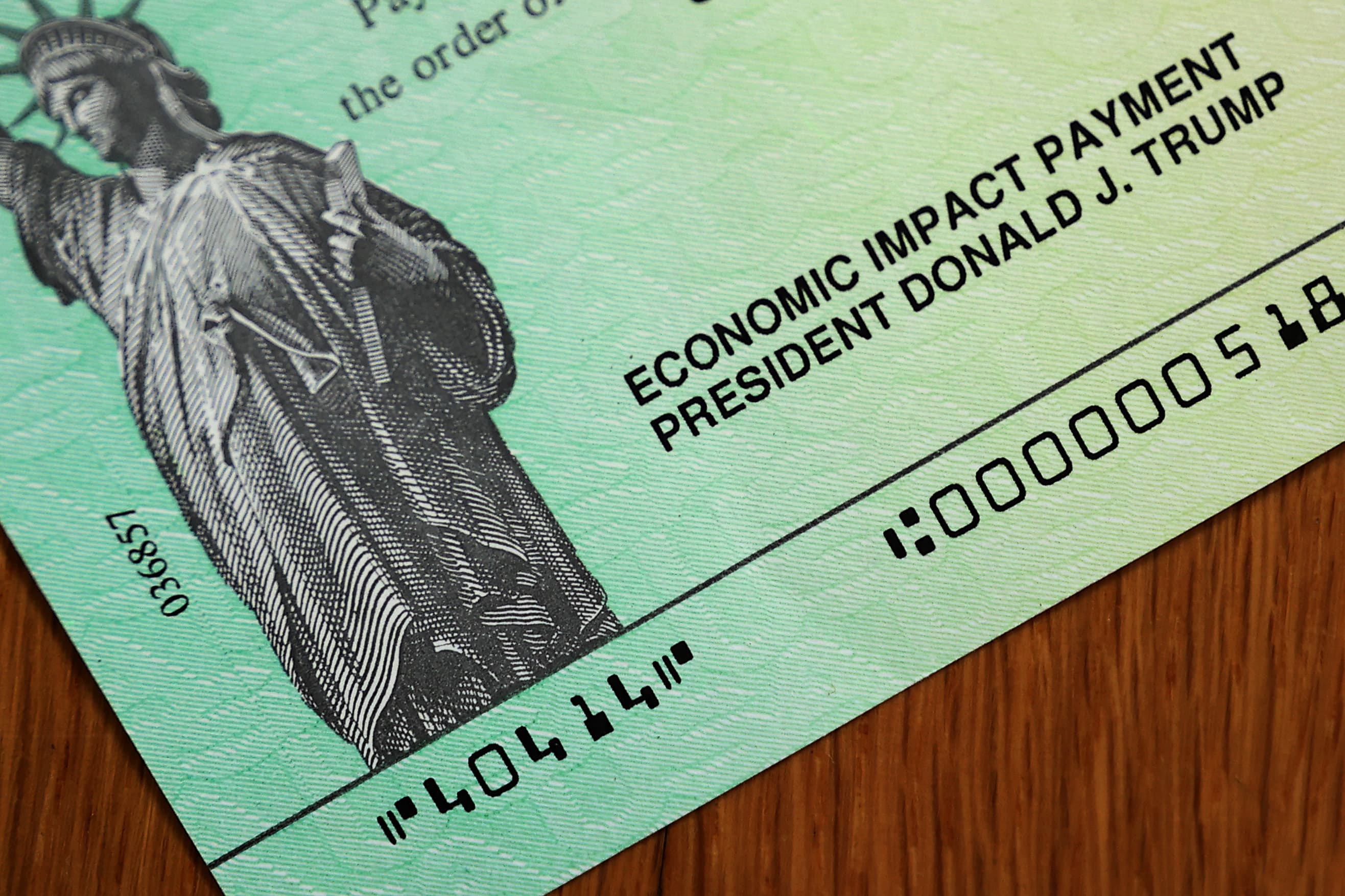
The cost of central banks breaking their inflation-control commitment when inflation starts running hot, is that the market starts pricing in their unwillingness to raise interest rates. This fuels a whole bunch of other inflation feedback loops, and then before you know it, the central bank wants to get inflation back under control again. But now nobody believes that they'll do what they say they're going to do, so they end up having to work twice as hard.
If your goal is stability, it's better to just keep your promises to begin with.