At this point GLTF seems pretty darn good and seems broadly usable. It embeds the mesh, textures, animations right in a single file. It can represent a single model or a scene. I also has a binary format.
3d need not be so complicated! We've kinda made it complicated but a simplification wave is likely coming.
The big unlock for 3d though will have to be some better compression technology. Games and 3d experiences are absolutely massive.
I think people forget, it's literally your money. Yea it's theoretically subsidized but the amount of money you put into the system over 40 years is probably more than you'll ever get out of it.
- You pay roughly 1-2% of your salary to it every year
- The max weekly benefit in California is $450 for 26 weeks, so roughly $11k. But it's also a percentage of your salary
- Unless you get fired/quit jobs every year it's probably very hard to get more out than you put in and even then there's probably other safeguards
The form factor here is cool, but as someone whose been resin printing a bunch lately, the pitch to carry it around in your pocket sounds questionable.
1. Where are you going to store the resin? It isn't good to touch it. Are they also expecting people to carry around somewhat toxic resin in their other pocket and then make a little puddle on the ground to print? Resin printing is messy and cleaning is hard. Make sure to carry isopropyl alcohol in your other pocket.
2. It produces toxic fumes while printing that you need to exhaust. So you at least need a mask.
3. It takes hours to print on a large machine: you need a model file, to edit the model to print in resin well and then the actual print can be multiple hours long. Not to mention multiple print failures which is often the case.
Everything mentioned about the surgical application sounds possible today, but it's still not fast enough or reliable enough in that scenario. Also... Resin isn't that strong, you want to graft it to a bone, what?
Raw materials aside, a tiny printer can go places a large printer cannot. Space? Deep sea? Inside other machines? Or on the tip of a robotic arm to do print little parts right onto their permanent place like a spider placing silk? Who knows!? 99% sure the "in your pocket" statement is more like "smaller than a breadbox", as in, it's plain-as-day comparisons of size, not use.
The size of the printing mechanism is an innovation for sure, but I think after you add up all the other components to make a functioning printer you end up at nearly the same size: a resin vat, space to print, various leveling mechanisms, filters, UV light shield etc - the form factor doesn't really change all that much.
If you think 3D printing is always going to be on a flat bed of the same size using the same amounts of material, then yeah, minimizing the printing mechanism sure seems like a non-necessary improvement. But that's not the intended use case anyway. It can only print small things. Maybe it can add tiny details or structures to large prints though
Hmmmm interesting. I can see a use case for like a drone or small robot to have one of these attached to add details all over the place. Ok you've convinced me it's cool lol
Imagine the equivalent of endoscopy: being able to insert a small tube inside of an object and print structures larger than the tube inside of them.
Obviously, that requires a lot more than just this, but it's intriguing to think about being able to perform internal repairs of nearly-sealed objects.
Or print a kitten inside a bottle, for those old enough to catch the bonsai kitten reference. ;)
Resin isn't toxic. The problem is that resin can cure under your skin and the only way to get rid of the resin is for your immune system to do it. So people develop allergies against cured resin, which tends to cause more damage than the resin itself. Even after you have developed a resin allergy, there is generally no long term damage as long as you stay away from it and don't trigger your allergy.
Now seems a good time to point out, the wheel has literally been reinvented over and over again. The wheels of yesterday were terrible. Each version gets better. It's fine, reinvent away folks :)
Seriously, a naive database sharding algorithm could be implemented in a week or so by a competent dev.
A company like figma (billions in revenue) putting a small team to implementing a database sharding solution for an un-implemented use case (RDS, not just postgres). AND open sourcing it creating a value for the community is a net-good for the industry.
Sharding is the easy part. Eventually you need to implement distributed transactions, taking a consistent backup across shards, PITR, resharding, load balancing, and the list goes on... That takes exponentially more number of people and time and mainly risk.
It works for Figma(for now), but for it to work as a solution for other companies with different hardware, data schema and access patterns will add even more complexity to the mix.
It's a excellent solution but I don't think it be good enough in the long run.
And that would be the solution you'd absolutely abhor.
Database sharding has a bunch of gotchas and things to think about because you must consider query access patterns along with your sharding (unless you want the devs to get owned or have very weird behavior.)
Building something super simple can be ok for the base use case but if you are a multi-billion dollar company you can probably afford a few dbas to actually make your platform good.
Complexity is a great reason to implement something like this in-house. It's probably better to understand (and fully control) the sharding and transaction mechanism than to trust a third party with such a core piece of infra.
As companies get larger they move further up the stack whether it's sharding techniques, databases, custom orchestration software, their own networking hardware, etc.
About 7 years ago now I'd say I had an identity crisis. Startup life is rough whether you're working for someone or on your own. I've done both. I wanted to find work life balance but that stressed me out more.
Ultimately, Jiro Dreams of Sushi kinda re-ignited that building passion for me. I read some books that made me realize I give to many F*s about things that don't matter. I have my day job and am doing things I'm proud of on the side and oh-ya I have a family and work life balance now some how.
I guess looking back, it was about finding the right mix of what I want to spend my time on day-in-day-out, and matching it with the right people and work around me. It was about seeking out and trying different things until I found the "happy path" for me.
I want to build cool stuff people use, but I hate feeling like I'm in free fall. I'll end up choosing the 30% risky path these days, and maybe that doesn't make a billion dollar startup but I don't really care. Or maybe it will because I'm just building stuff I want shrug
Finding the right abstraction is hard. To me in seems clear Next is tuned for Vercel Now. If you build in a compatible way it works great, it's a nice "serverless" setup for serving pages. There's a whole range of use cases this doesn't work for: eg realtime apps, apps that care more than average about security, etc.
Another insidious thing in Next: their middleware is completely sandboxed and you can't use any standard Node functionality. It doesn't matter if you're using vercel now or not, and there's no way to disable this.
This is pretty important for things like sessions with httpOnly cookies. And it forces you make an API call to yourself to resolve.
I think so much of the commentary misses the point. Goals drive focus, they help folks say no and ask "how does project x help get more sign-ups?". If nothing else it's a communication tool. If you want to get another team to do something, show them how they'll succeed at their goal and help yours too.
The opposite of a system like this means - every VP has an initiative they're trying to push and now there are 50 new projects to maintain and eventually sunset.
This was me - made websites for my band, friends bands, made ticketing website for promoter friend, made websites for custom gear companies, ended up in a events startup then to the moon. Yes CS degree happened in the middle of all that too.
To think that (relatively?) small things like that could jumpstart a career... I'll be honest, I'm still young and I wonder what kind of journey is ahead of me
My only advice is, just play around, and try different things. Freelance for a while and charge terribly low amounts of money. Partner up with different types of people on ventures - yea this requires trust and you will get grifted from time to time.
But through it all, you're learning and building skills. Hell you're having fun.


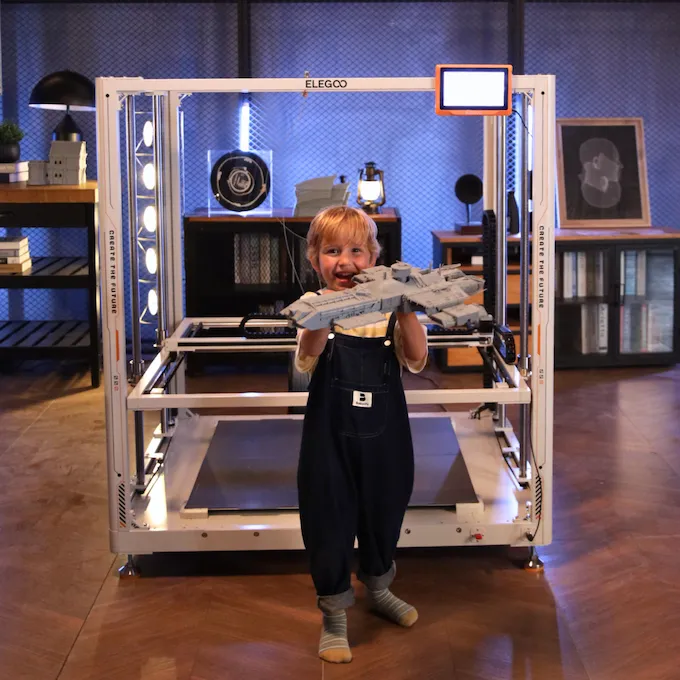
3d need not be so complicated! We've kinda made it complicated but a simplification wave is likely coming.
The big unlock for 3d though will have to be some better compression technology. Games and 3d experiences are absolutely massive.